The Ancient Kyoto Alley That Inspired a Luxury Private Villa
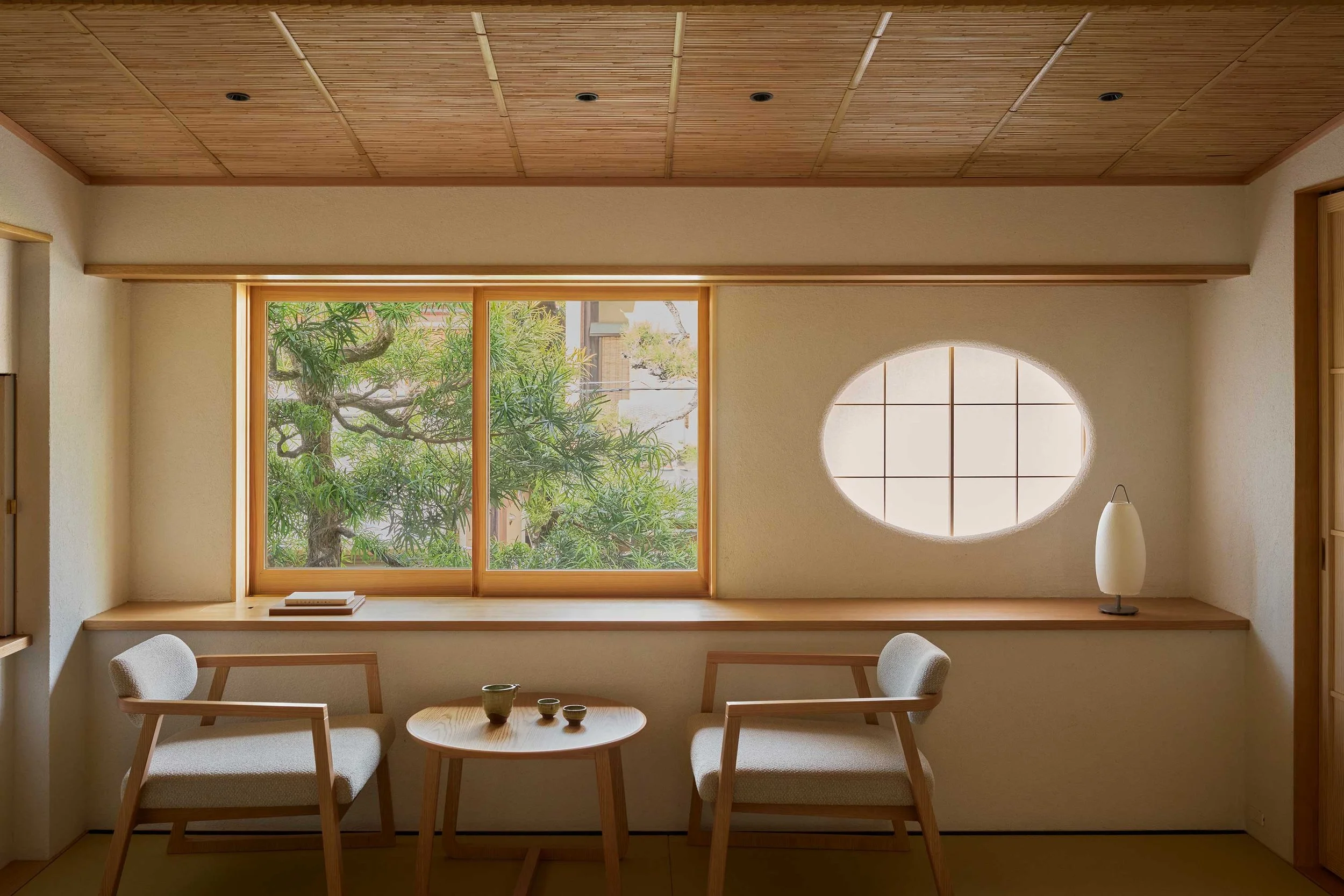
A century-old Higashiyama residence, renovated by Kooo Architects, becomes the first property under the Kiraku Tei villa brand — its interiors marked by Juraku plaster, hinoki and natural light
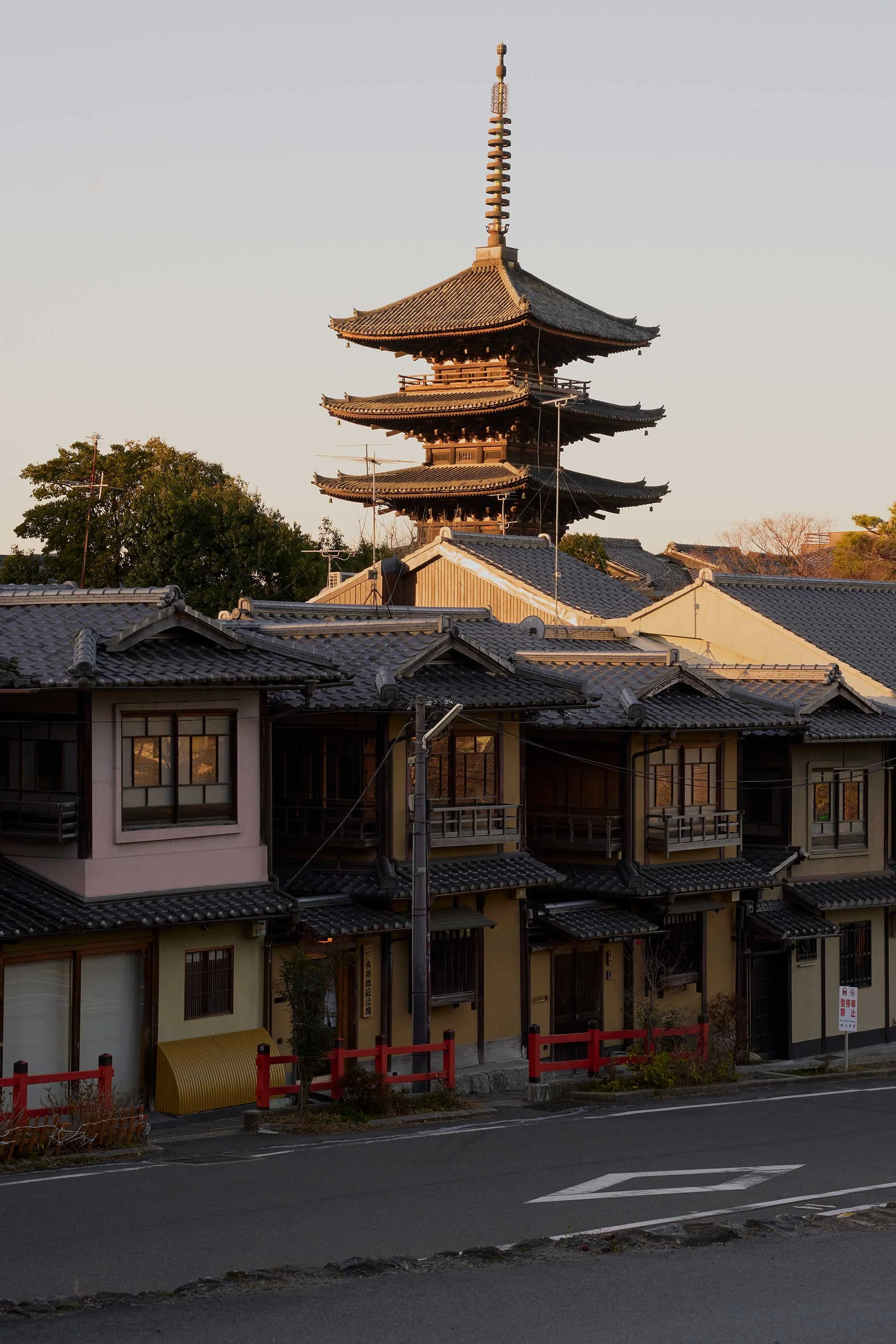
Imagine a narrow stone alley. Time-etched wooden facades. Blossoming trees in walled gardens. Hidden tearooms. A scenic Kyoto lane known as Ishibei Kōji is the beginning of the journey when visiting Kiraku Tei Kiyomizu — a private villa embedded deeply in its setting.
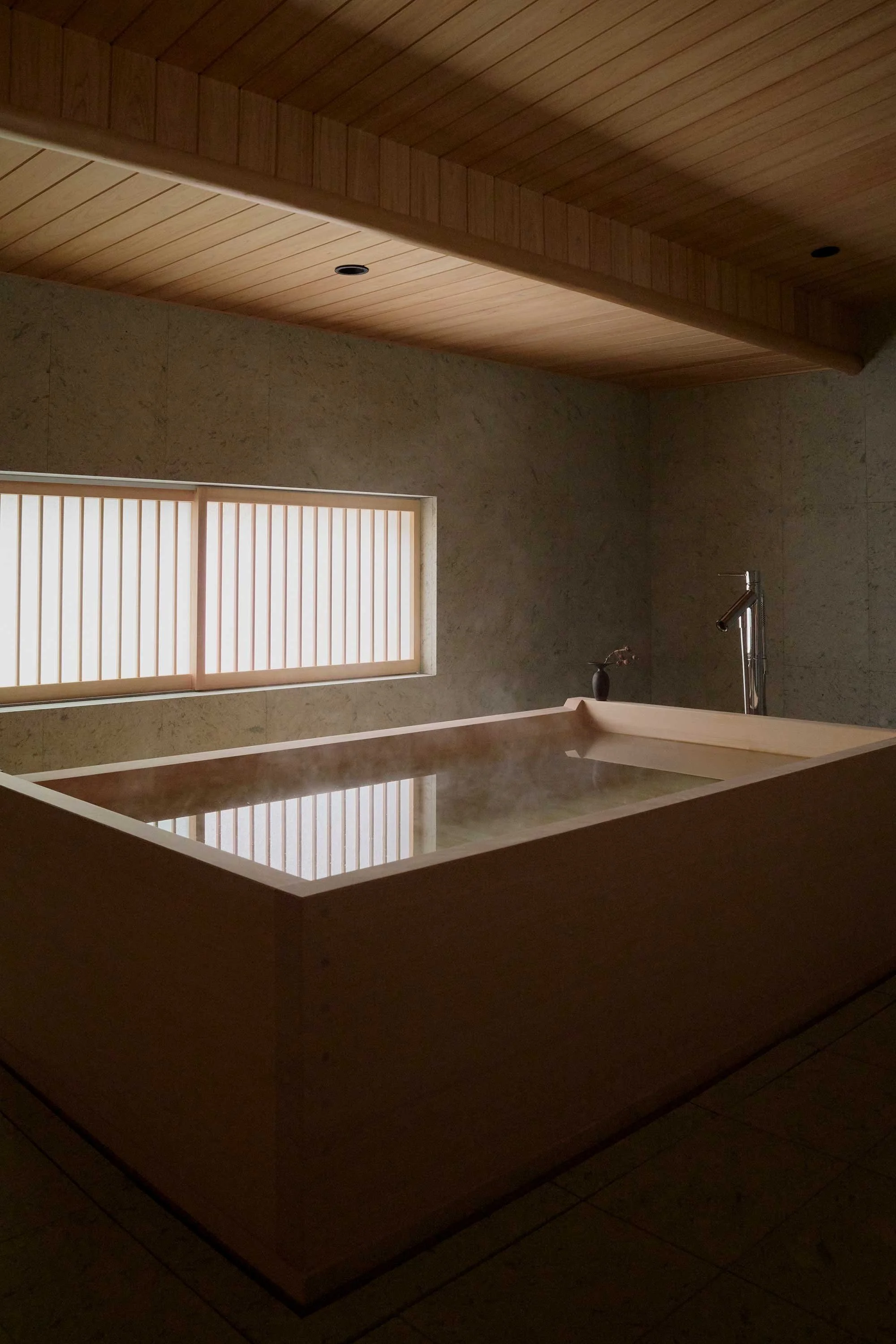
The house, renovated by Kooo Architects, balances a natural material palette of wood, stone, earth and tatami, alongside minimalist lines, bespoke furniture and modern lighting — plus a private chef’s counter, a hinoki bathtub and a serene garden at its heart.
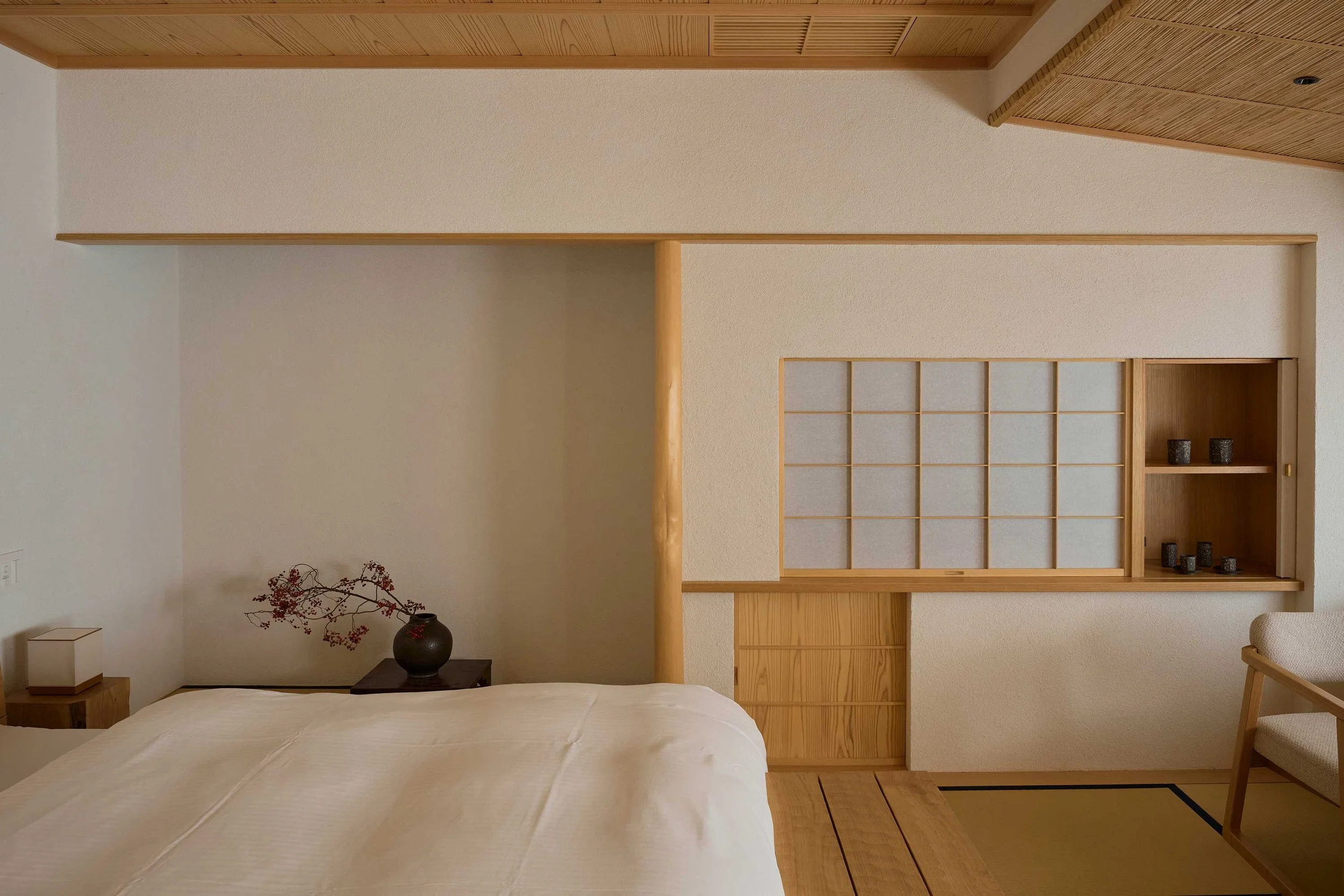
An intimate sanctuary in the history-packed Higashiyama district of Kyoto, the property — believed to be at least a century old — is the debut opening for Kiraku Tei, a new private villa accommodation brand, offering immersive stays in the ancient city.
As Kooo co-founder Shinya Kojima puts it, ‘We aimed to create a space where the power of human craft and the beauty of natural materials can be felt within the small, intimate scale of a Kyoto townhouse.’
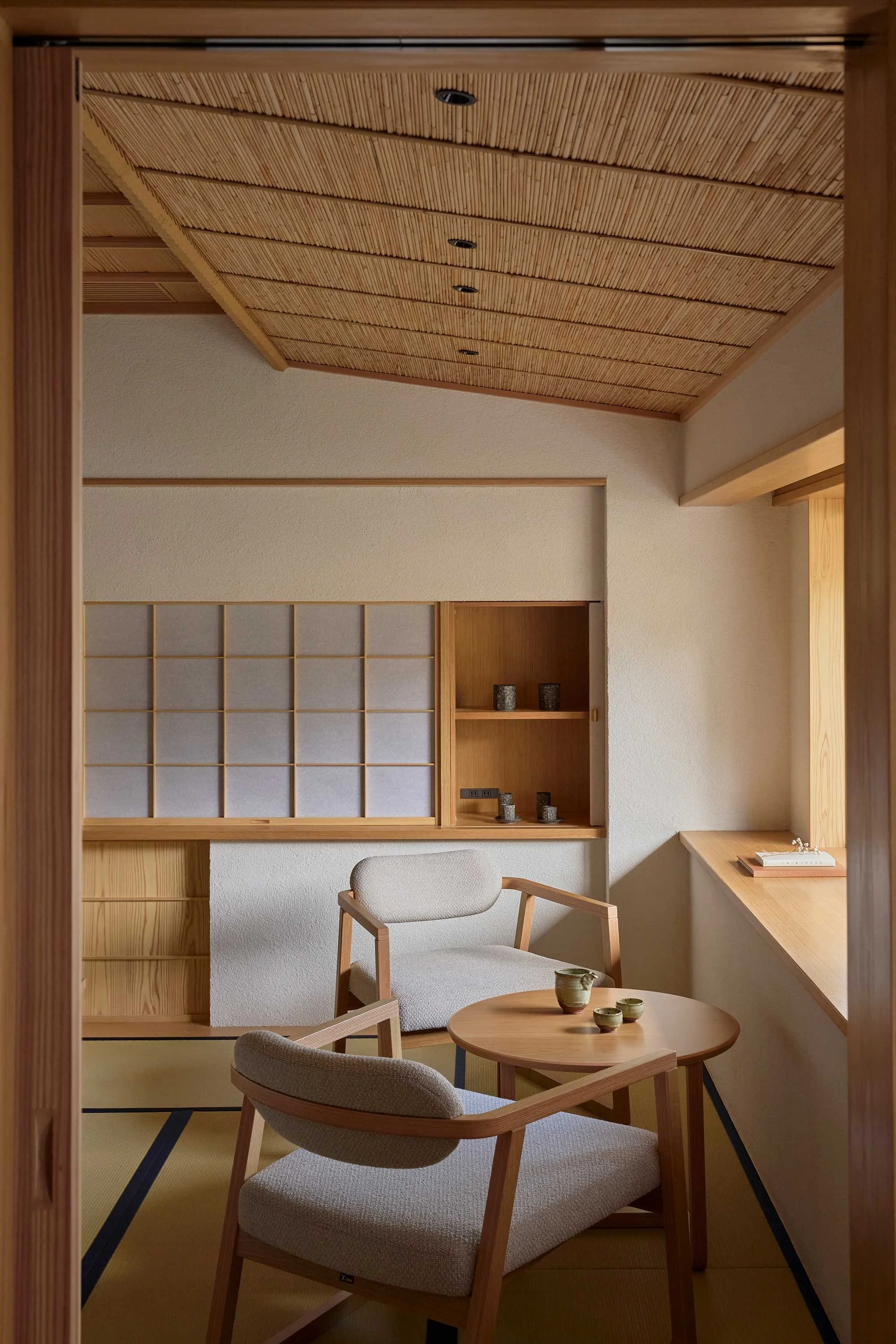
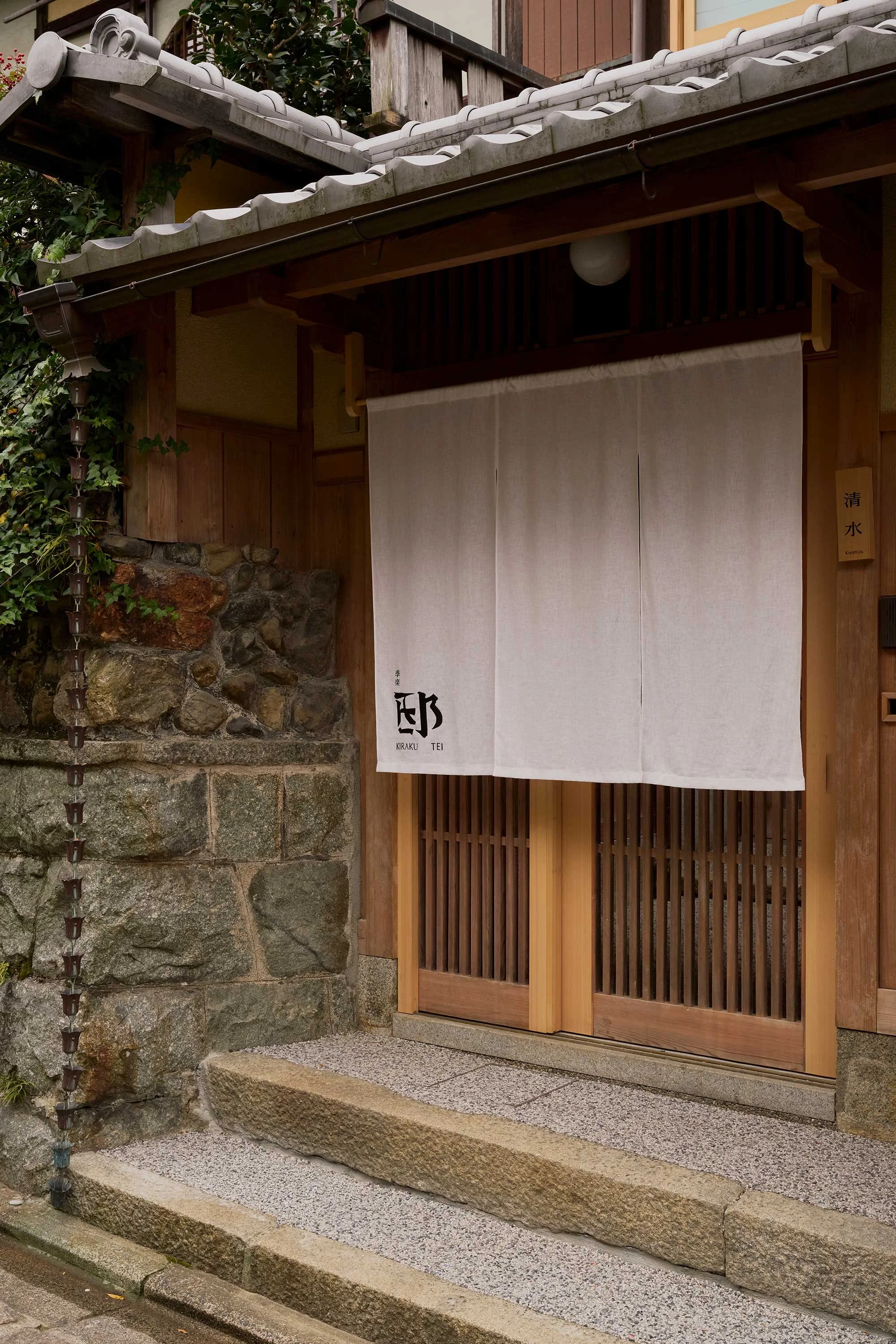
Ishibei Kōji is the atmospheric starting point of the design as well as the arrival experience. A stone wall and a wooden gate with a white noren curtain mark the threshold of the residence. Entering, shoes are slipped off and coats hung in a stone genkan entrance. Swathes of organically textured juraku plaster flow across walls and ceilings, immediately softening the atmosphere, alongside the minimal form of a kakehana hanging flower vase by artist Kouzo Takeuchi.
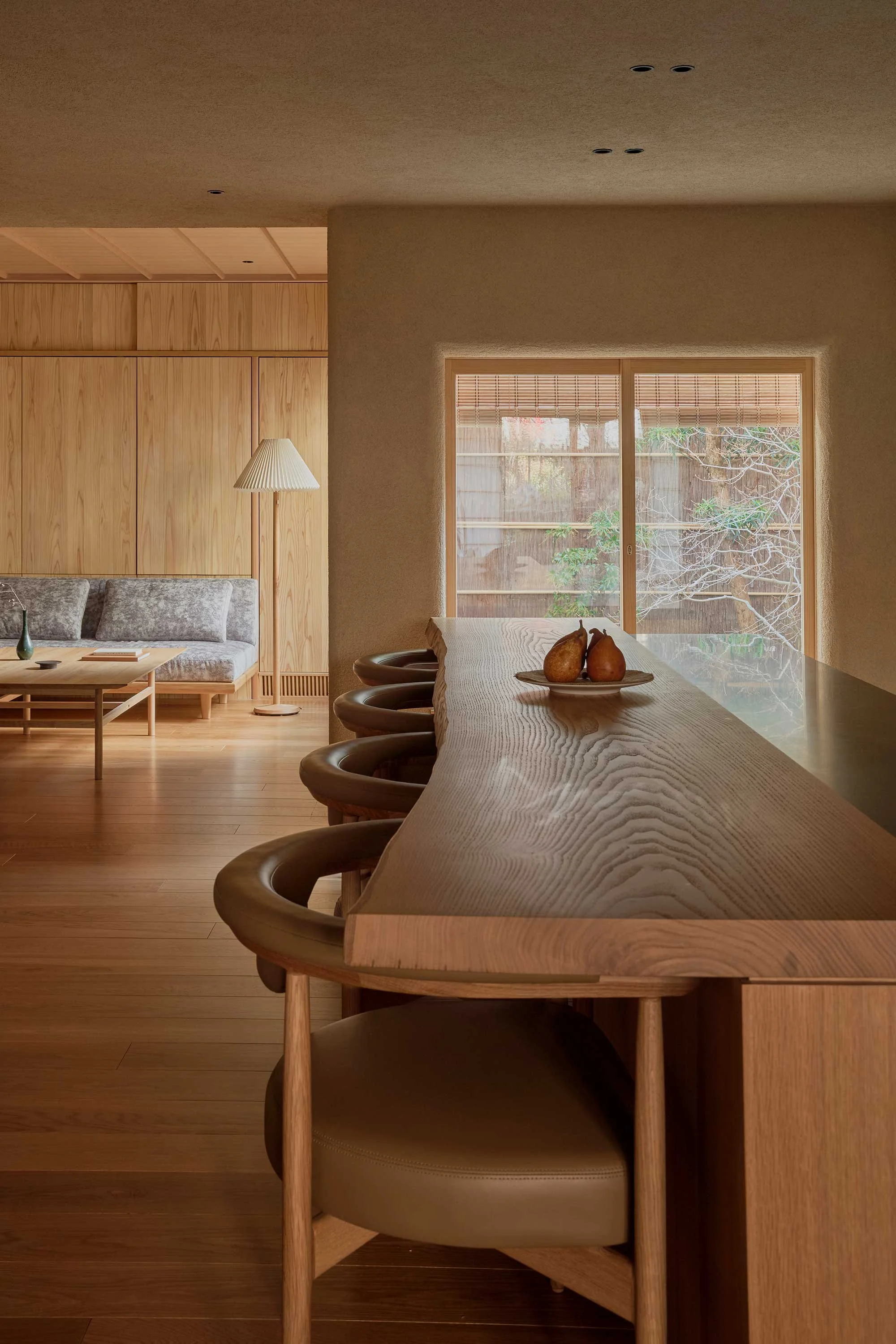
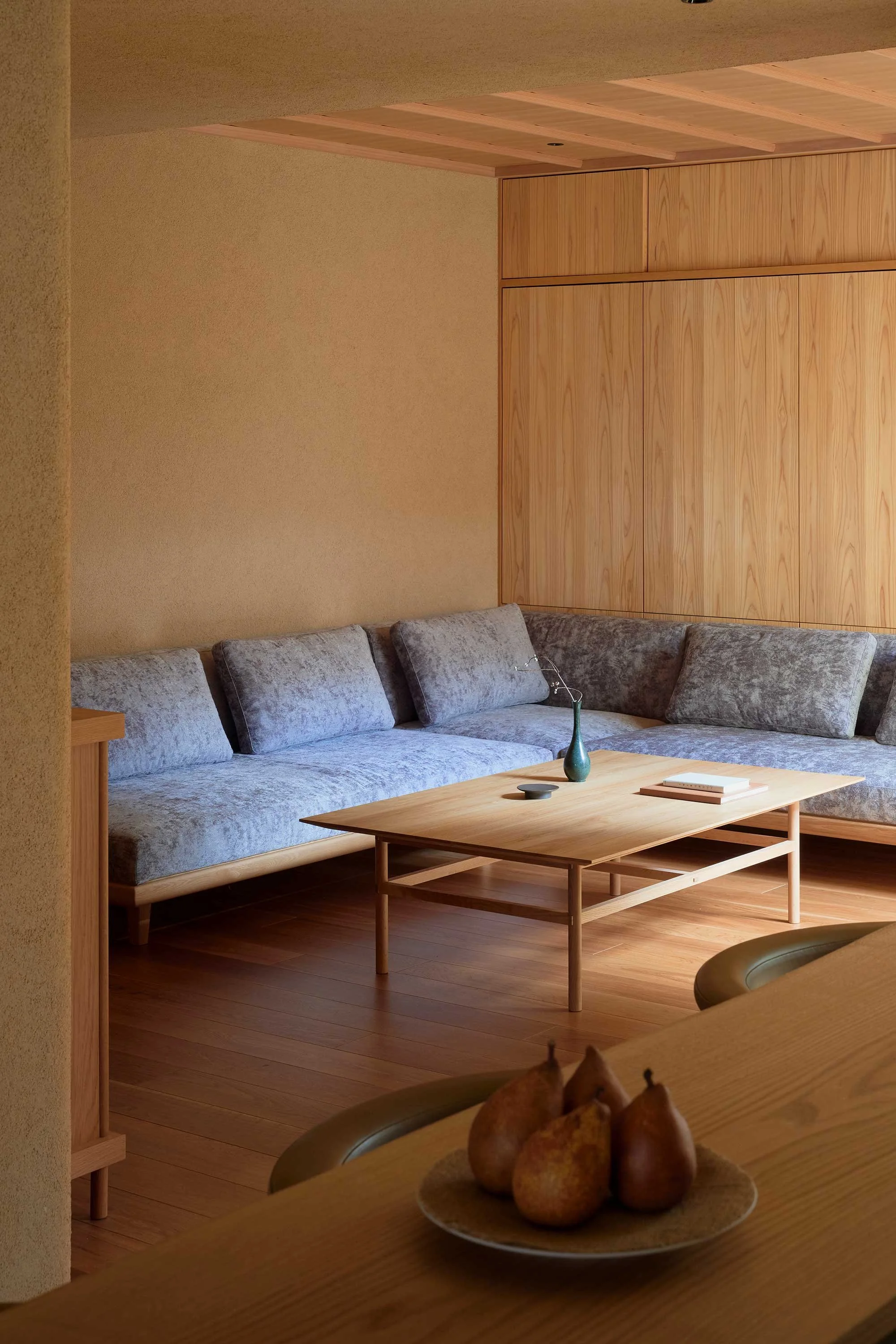
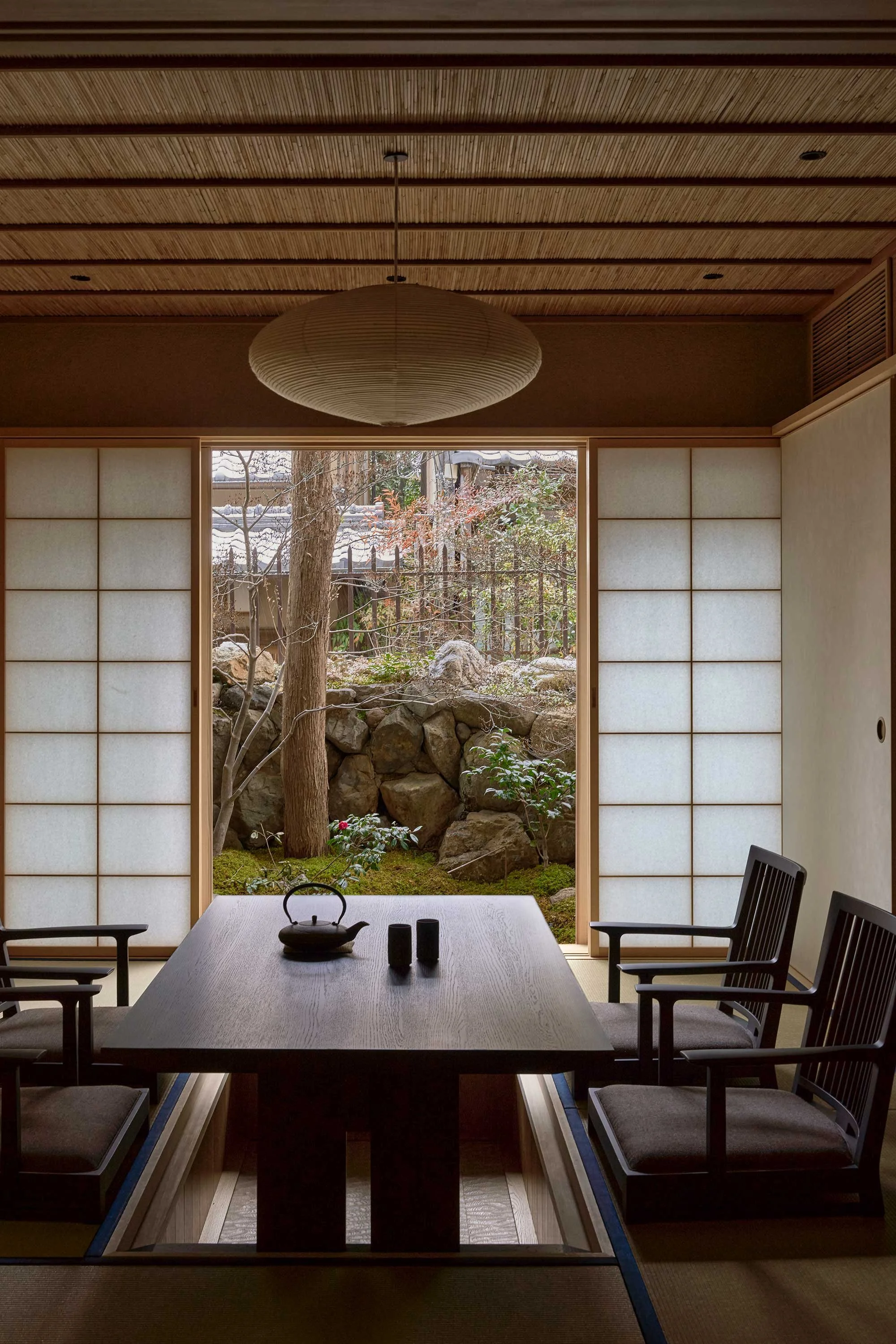
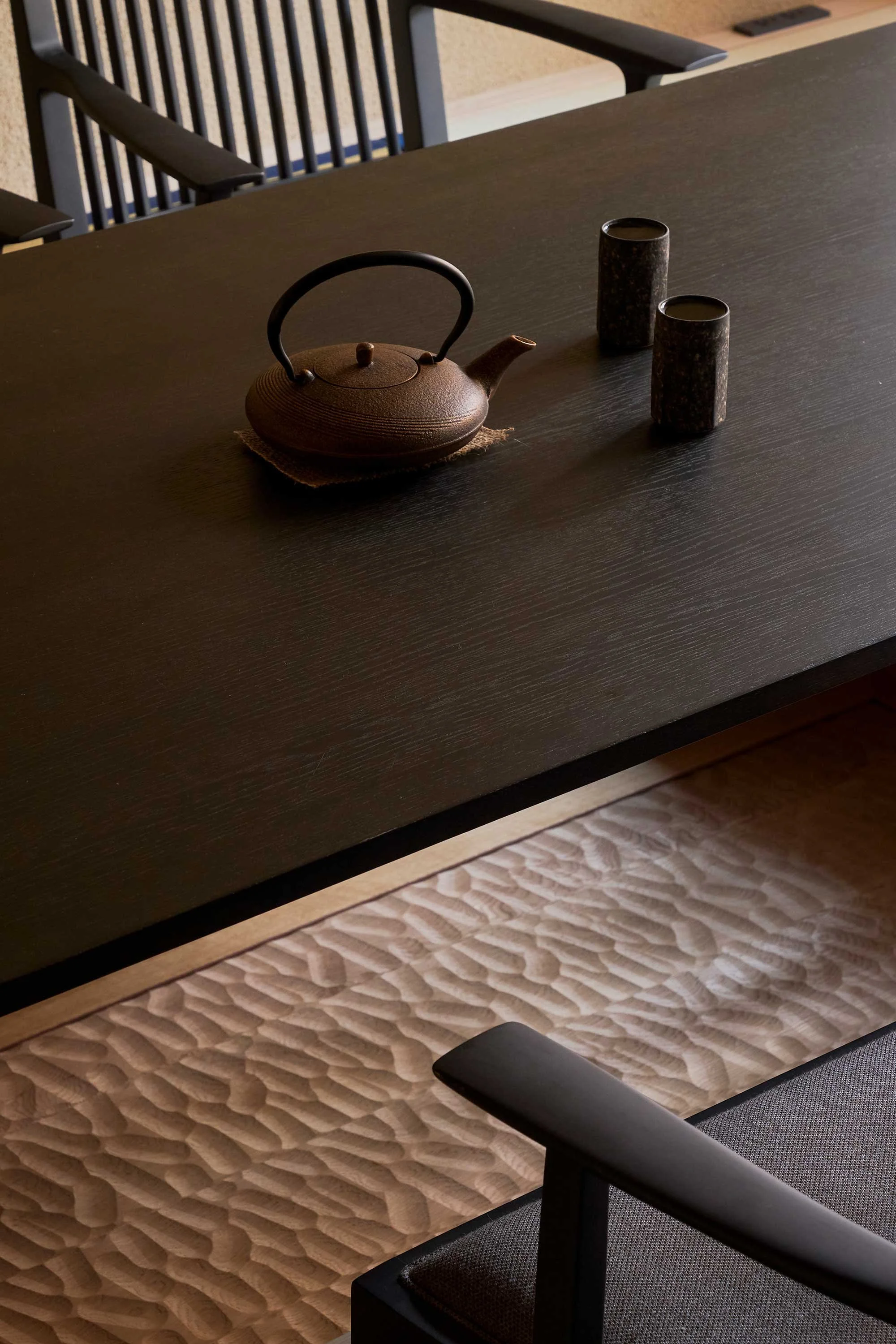
The interior is a gentle modern riff on traditional Kyoto townhouse aesthetics. Picture gently sculpted naguri wood flooring; a slightly raised tatami mat area with a low table and sunken chairs beneath a hanging oval lantern; a long organically edged chestnut wood counter running alongside a high-tech kitchen where private chefs rustle up dinner; and a relaxed living area, with low tables and sofas by Time & Style.
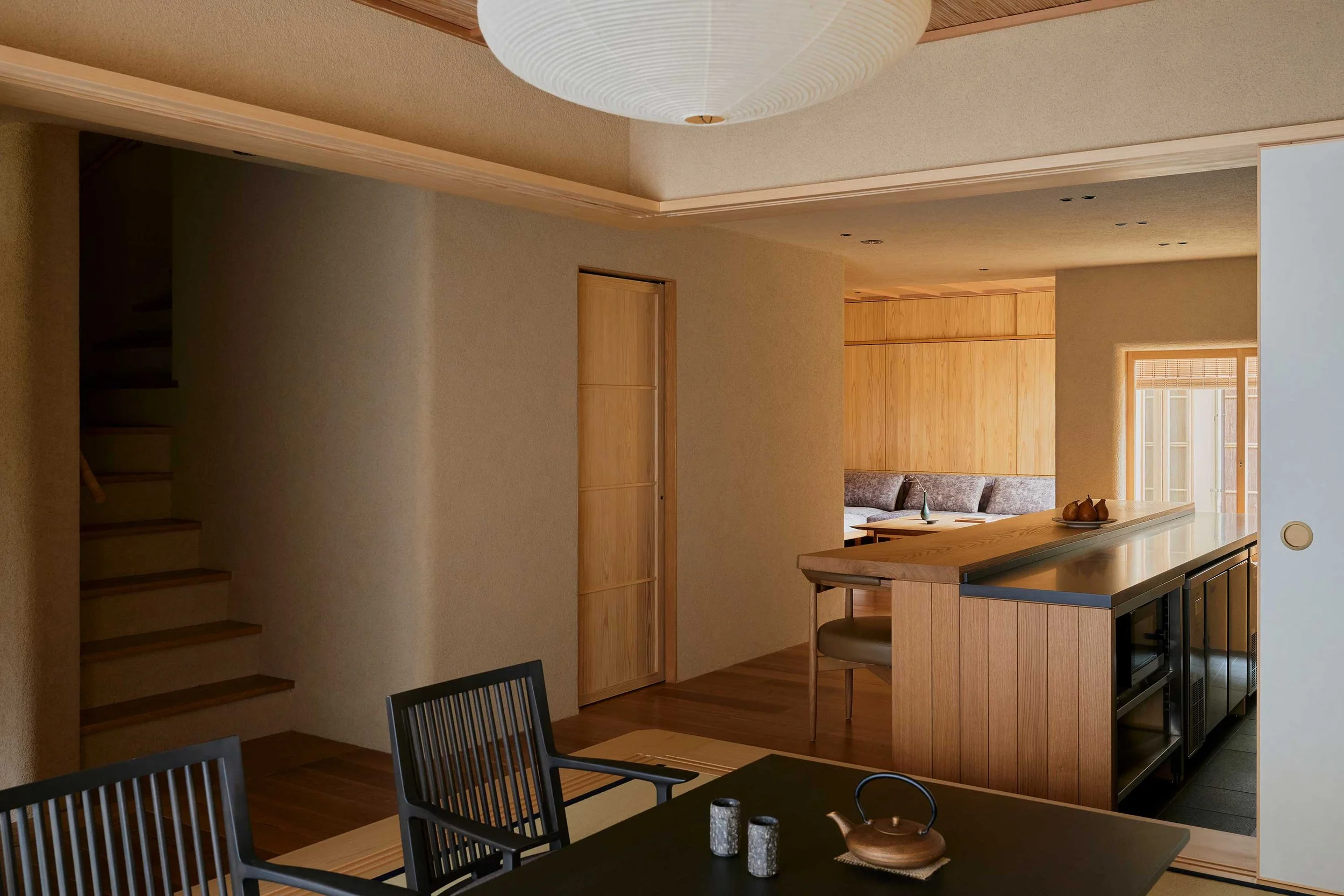
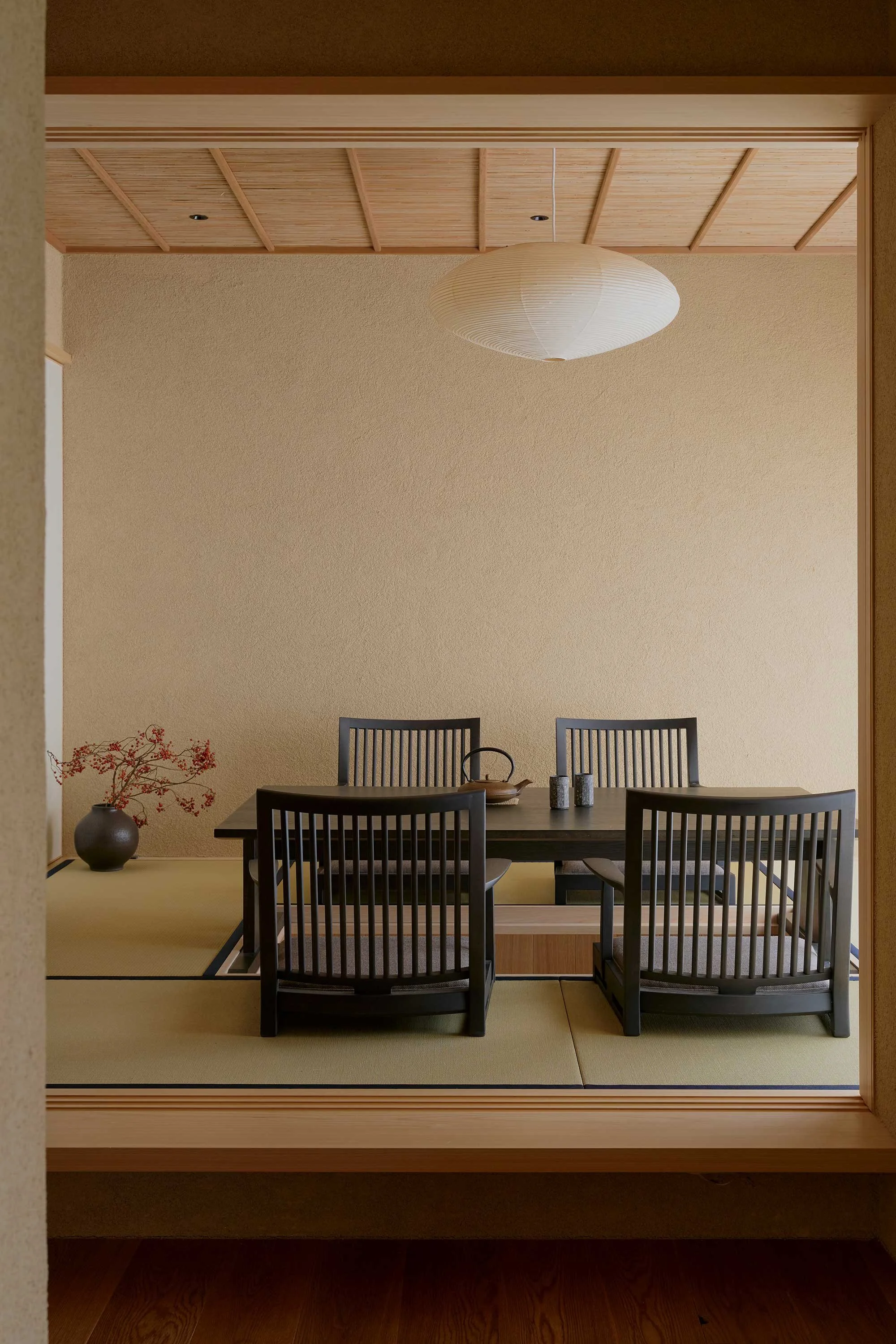
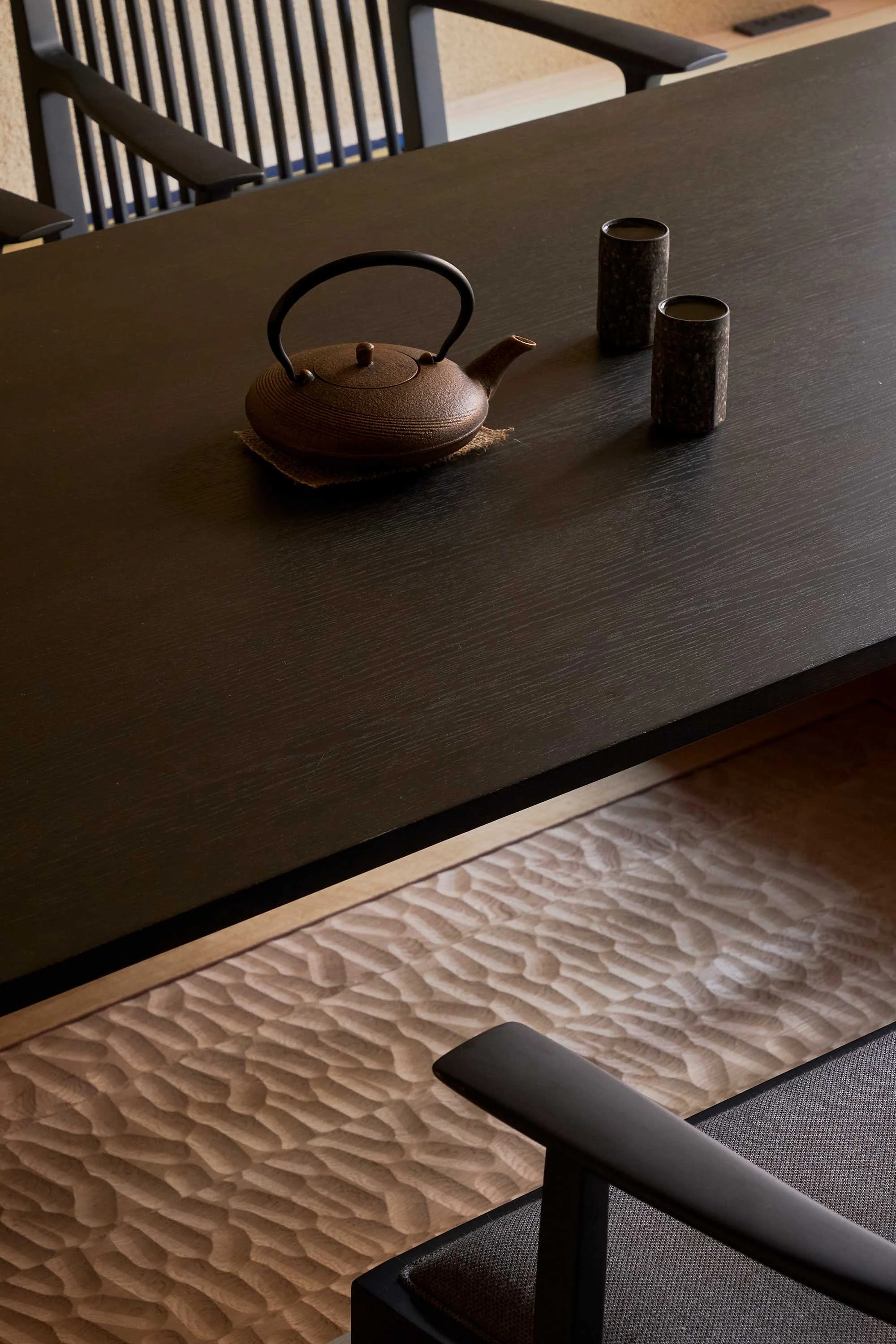
Connecting it all are cocooning sweeps of crafted plaster, as Kojima explains: ‘One of the most important elements is the earthen plasterwork executed entirely by skilled artisans. Rather than flattening the surface with a metal trowel, we intentionally preserved and emphasised the natural texture of the aggregate within the plaster. By allowing these subtle irregularities to remain, the surface captures light and creates delicate shadows.’
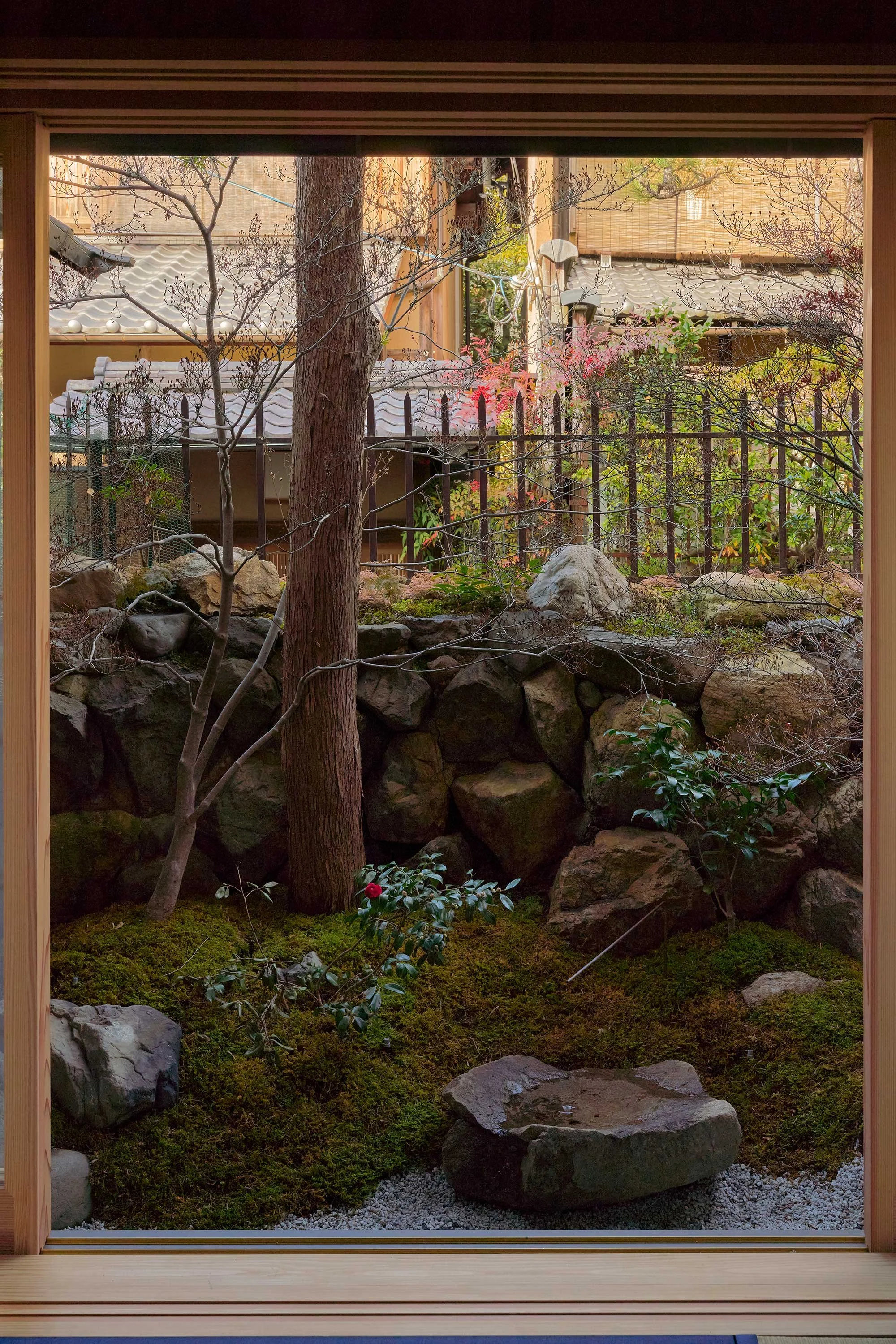
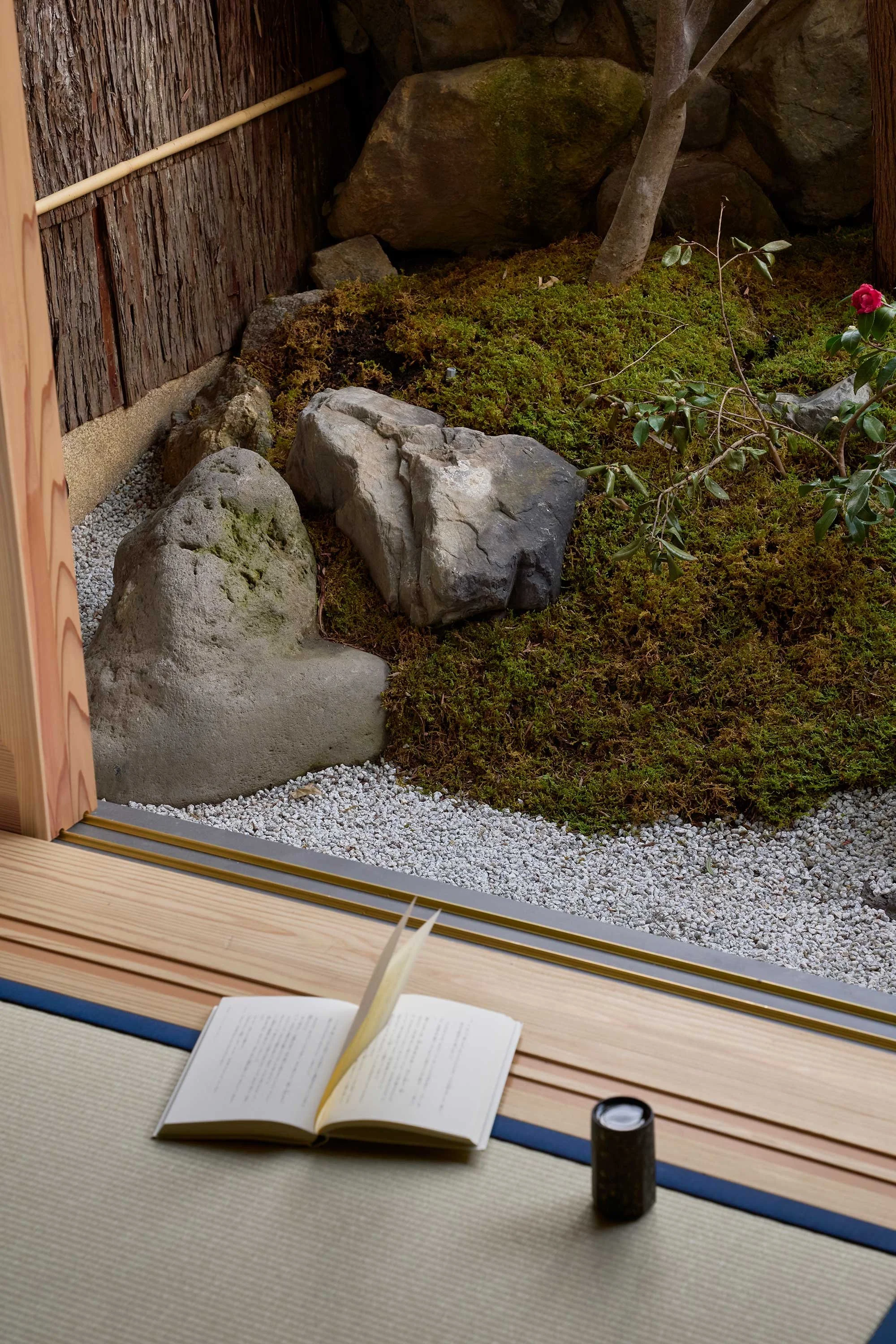
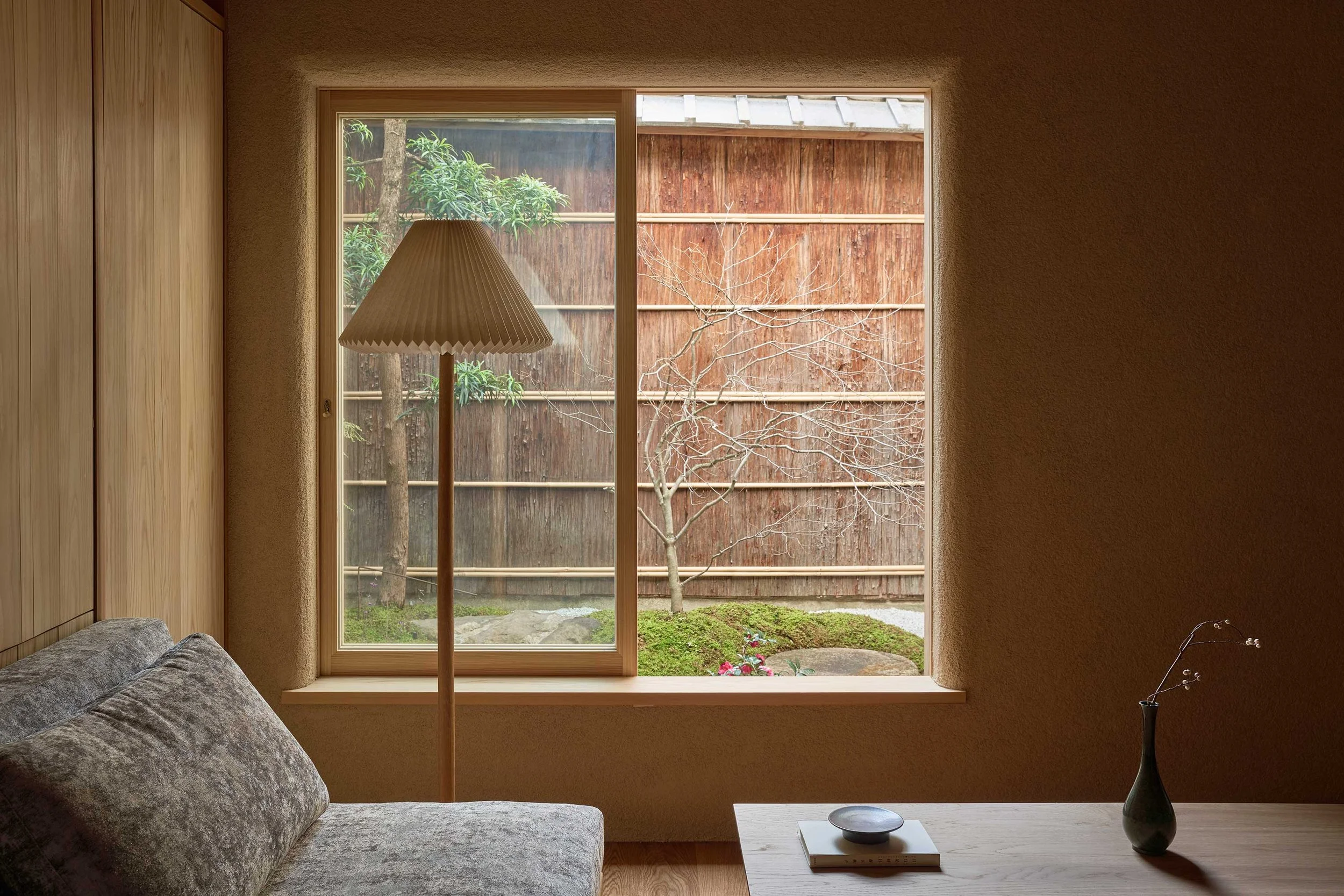
The heartbeat of the house is its internal tsubo-niwa garden, with its stones, moss and flowering trees beneath open sky, providing a meditative touch of nature as well as a source of natural light.
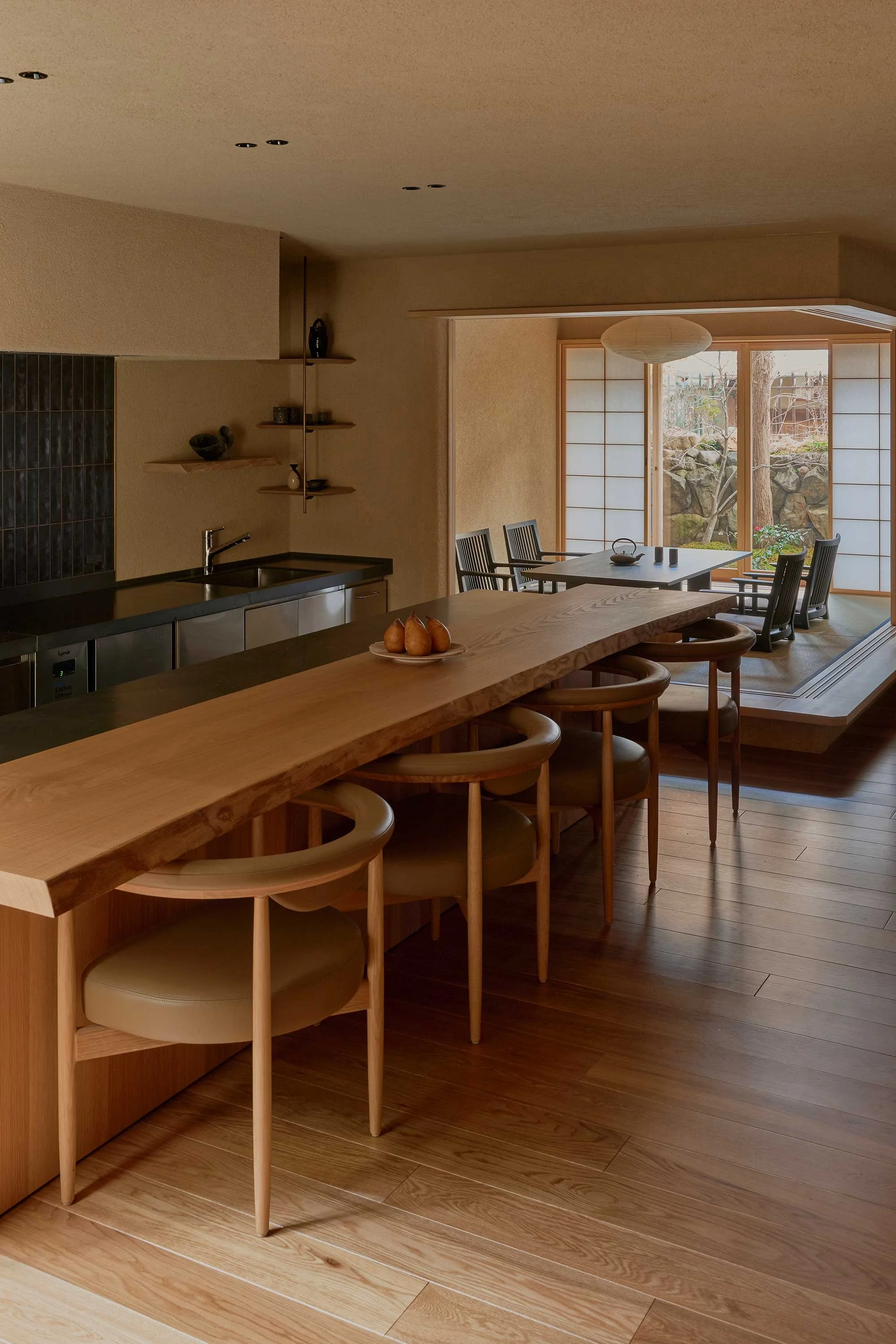
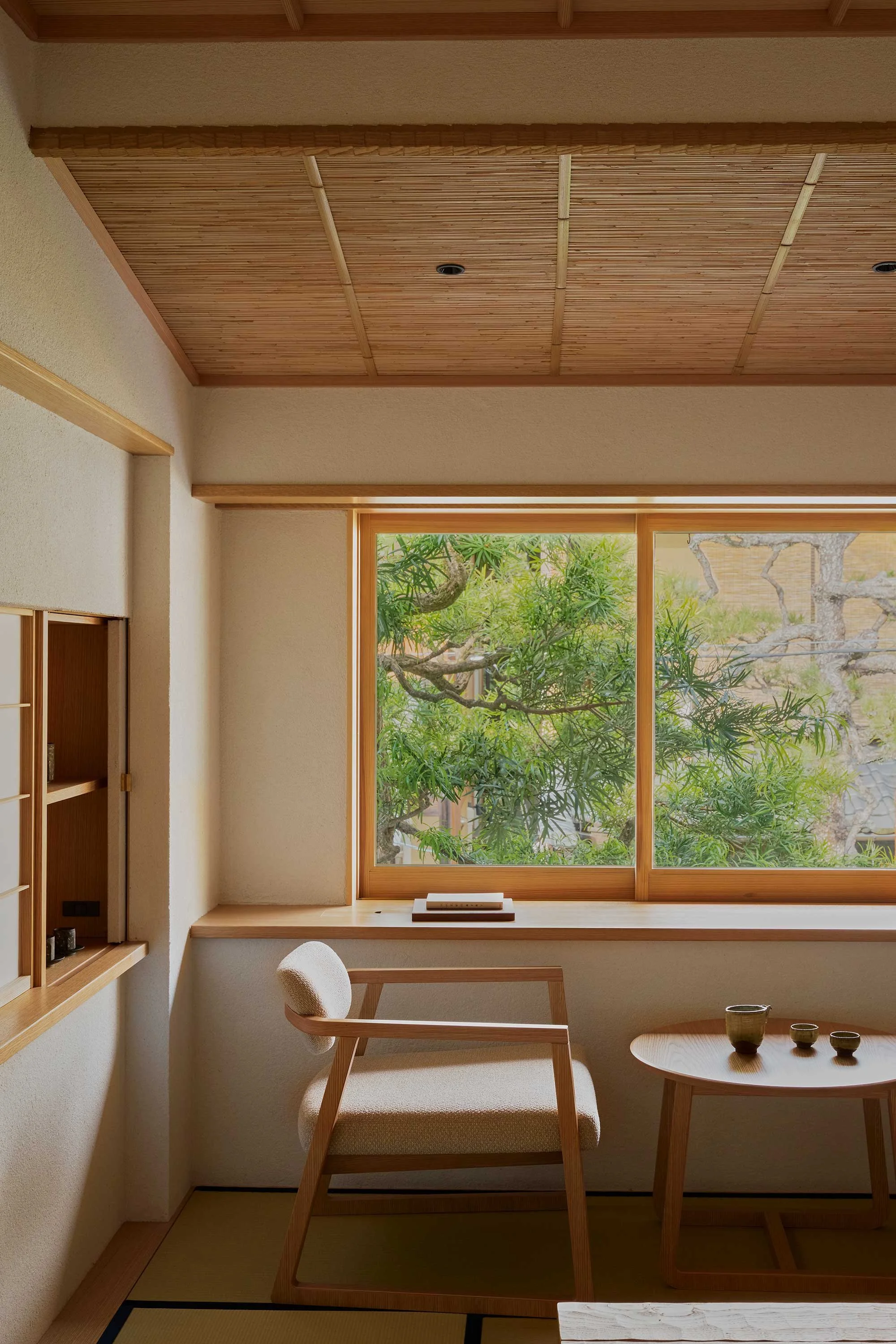
‘For us, the essence of this project lies in how to physically and beautifully maximise the limited and precious natural light,’ says Kojima. ‘By shaping the window frames with gentle curves, we sought to make the light entering from the garden more perceptible and expressive. The interior was designed so it would be perceived not as a sense of confinement, but rather as a form of comfort and intimacy. This transformation of spatial limitation into a positive sensory experience is the core of the project.’
The tactile plasterwork continues around a wooden staircase with a clean-lined rattan-wrapped handrail, rising beneath a circular window filtering light through paper and transitioning guests up to the first floor.
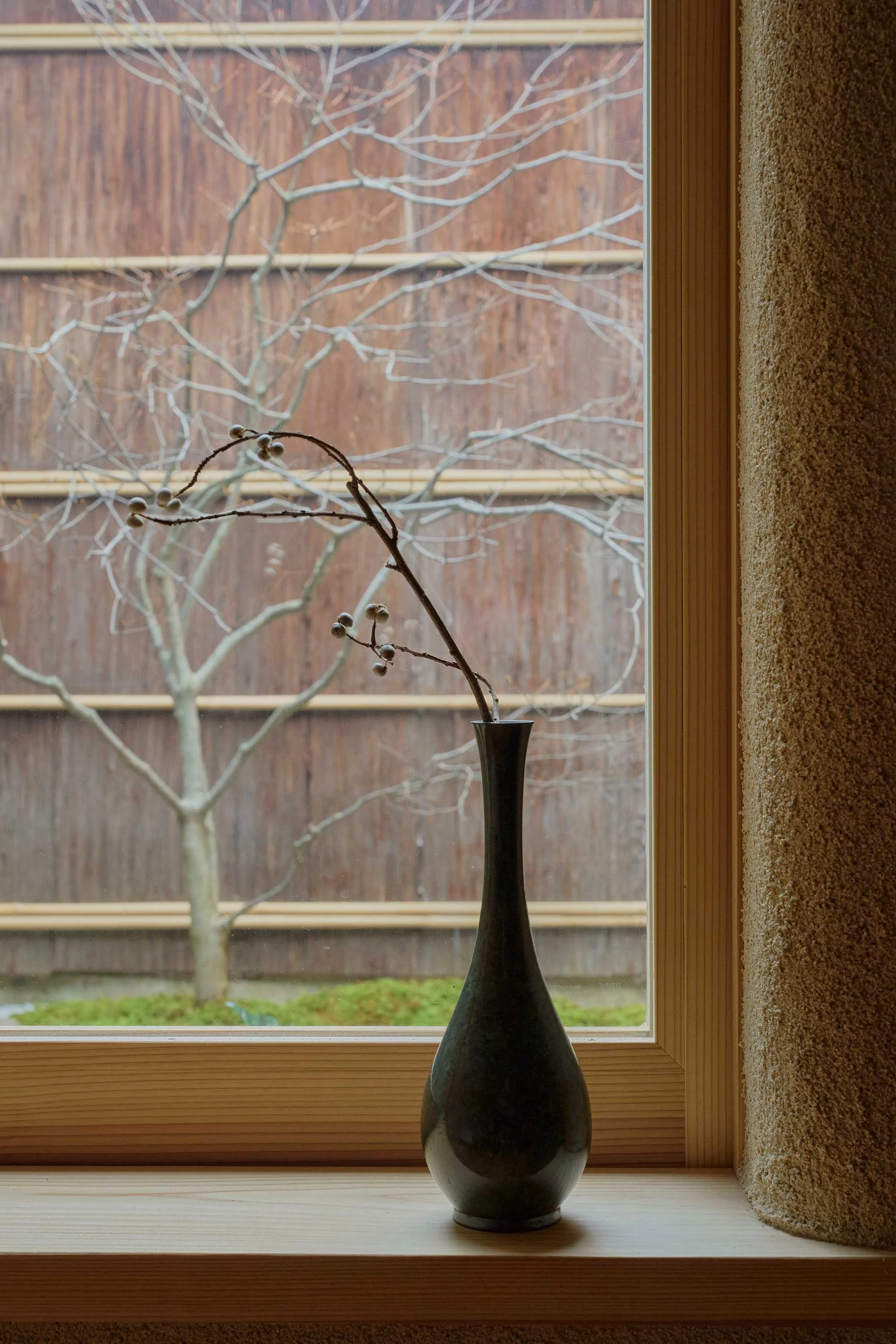
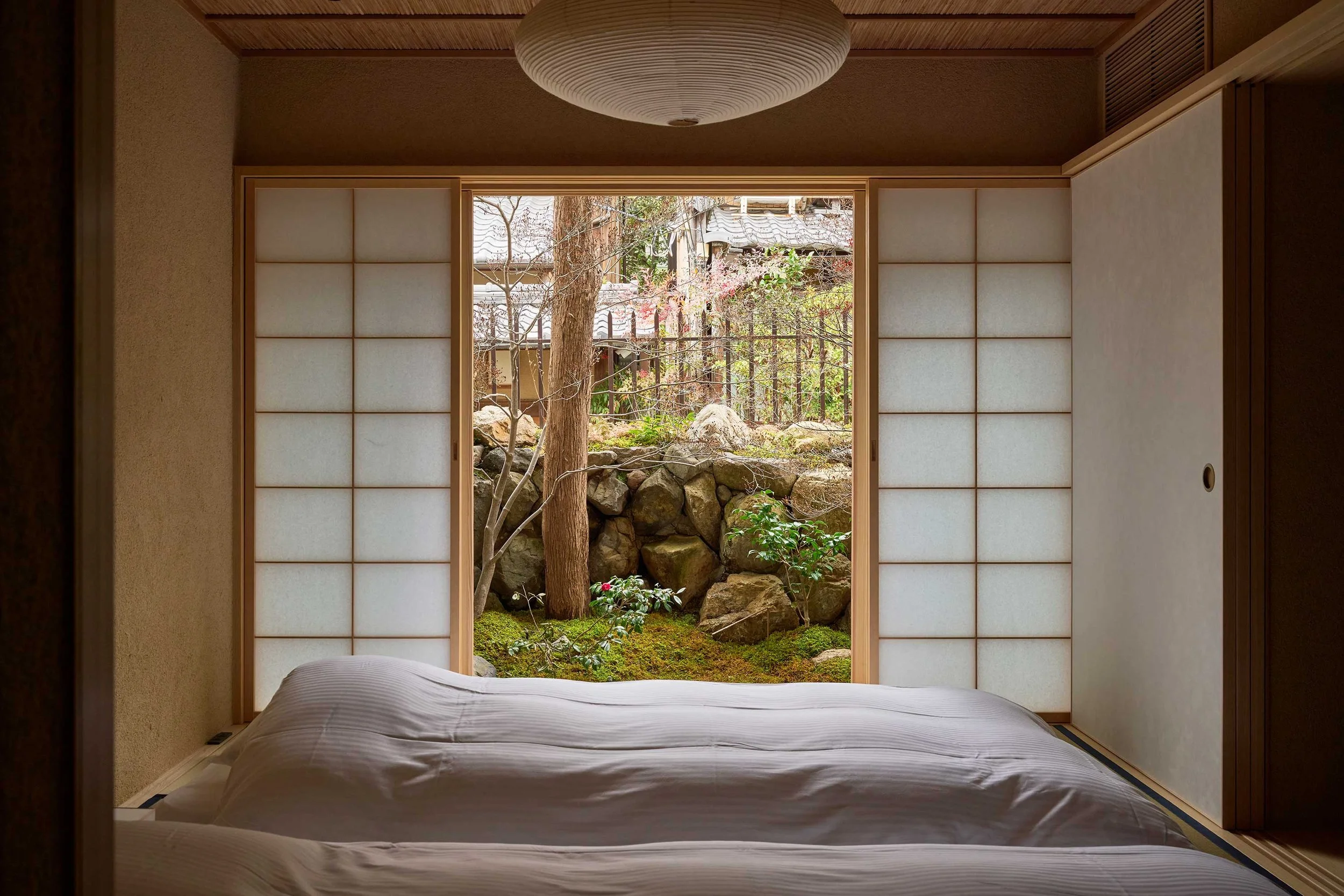
Upstairs, a bedroom blends traditional aesthetics with a modern edge — from the serene tokonoma alcove by the bed with artfully spotlit branches in a Shigaraki-yaki ceramic vase to low modern wood furniture by Tendo Mokko.
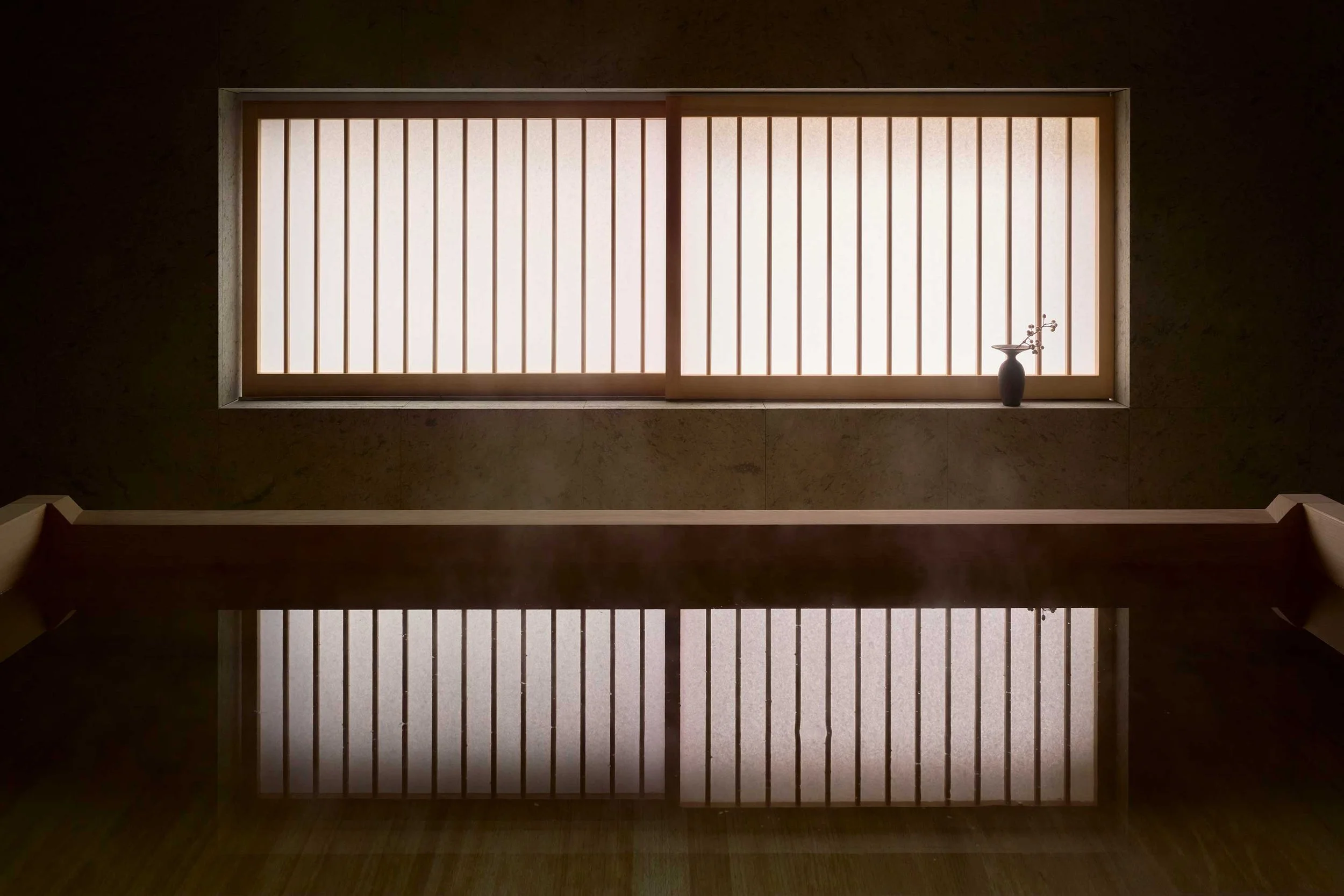
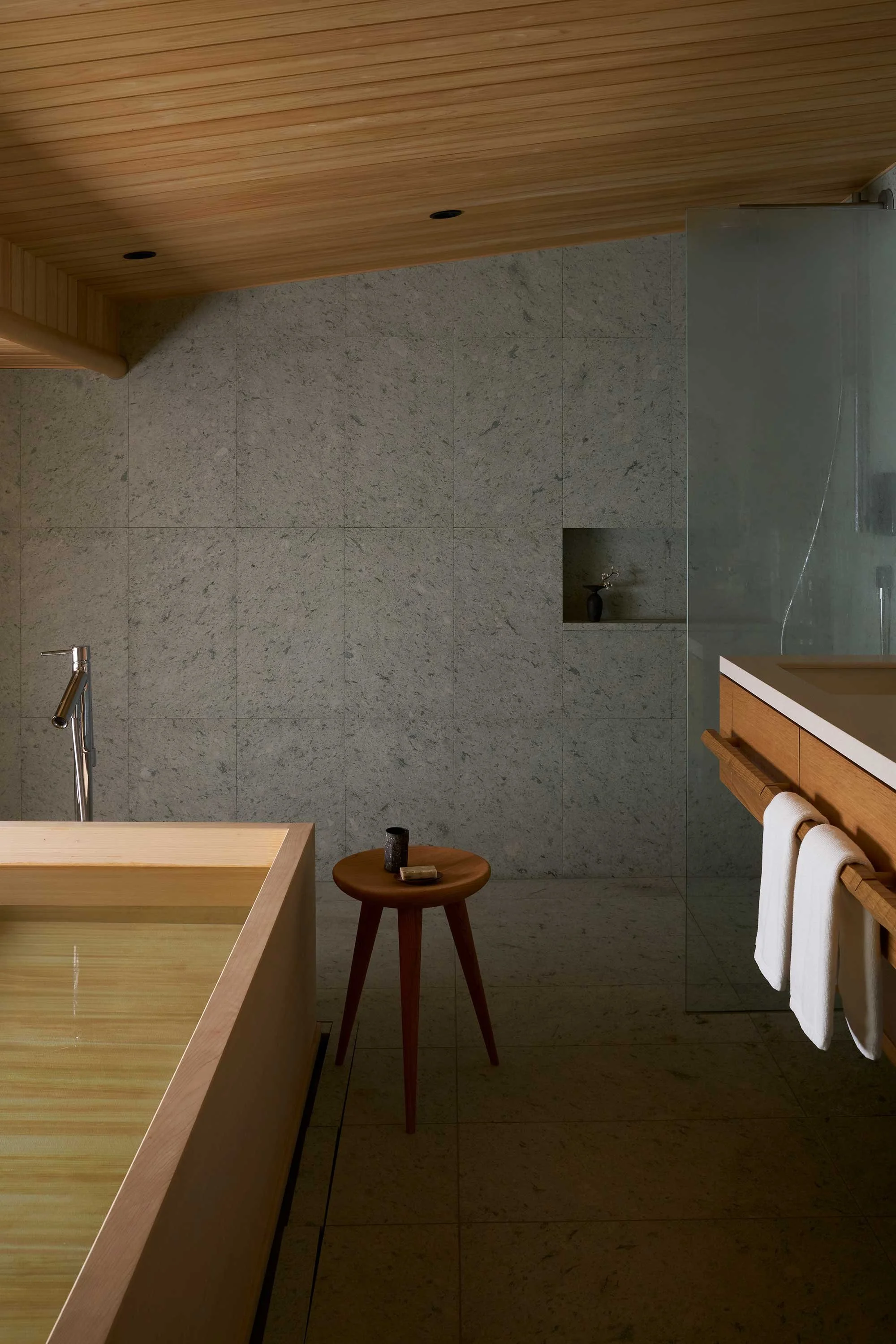
Traditional wooden saobuchi tenjo ceilings draw eyes towards windows, framing picture- perfect views of garden trees and alley rooftops, while the adjacent bathroom is home to green-tinged Towada stone, Kooo-designed wooden fixtures by Time & Style, plus — a centre-stage highlight — the clean-lined contemporary form of a large hinoki bathtub.
‘Crafted’, ‘shadow’ and ‘meditation’: these are the words Kooo use to sum up the essence of the house. Kojima adds: ‘The project is an exploration of how traditional spatial wisdom found in Kyoto townhouses can be reinterpreted through subtle architectural gestures, allowing natural light, texture and human scale to shape the emotional experience of the space.’
Text by Danielle Demetriou
Images by Iker Zuniga