
For Paola Navone, Accidents, Chance and Risk Are All Part of the Process
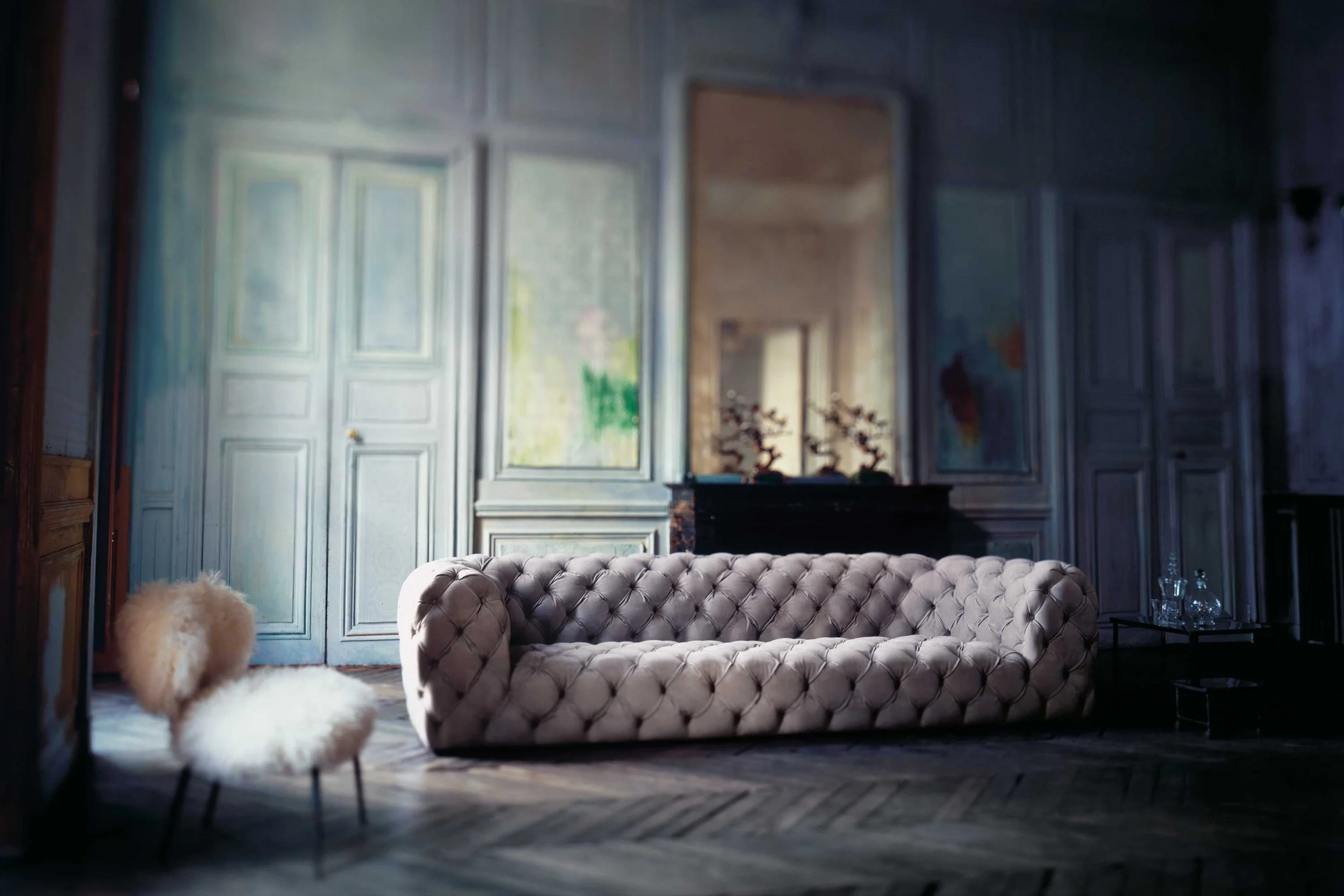
For more than two decades, illustrious designer Paola Navone has collaborated with Baxter to transform leather into a language of craft, experimentation and human connection, creating furniture that is as tactile and luxurious as it is timeless
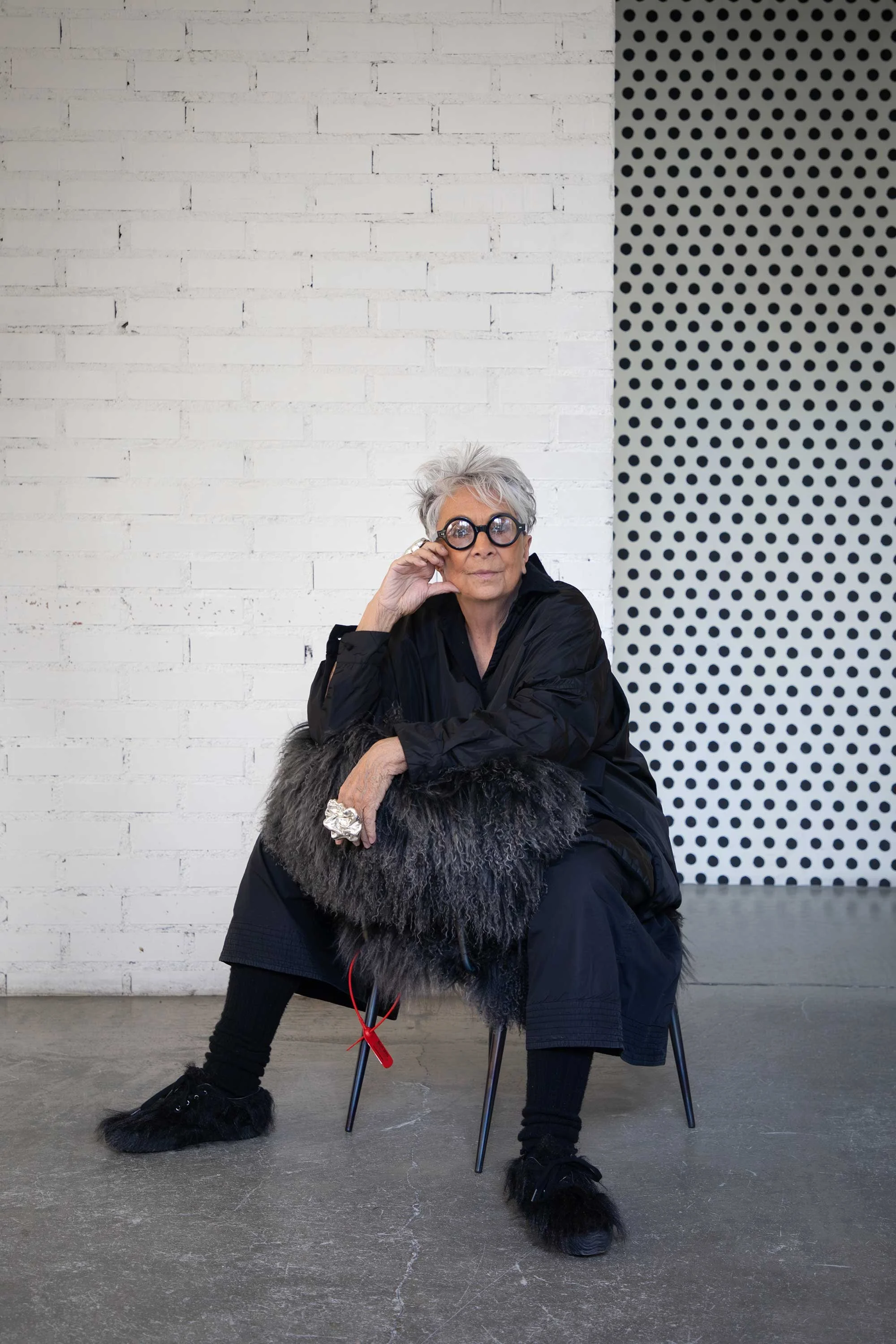
Paola Navone has spent much of her career traversing the globe, yet her most enduring creative partnership remains rooted in Italy. For more than two decades, she has collaborated with Baxter, the luxury furniture house celebrated for its pioneering approach to leather craft, represented in Southeast Asia by Space Furniture. Reflecting on their relationship, she says, ‘I met Baxter twenty years ago and discovered their approach — the care, the experiments, the attention to touch. That’s how our relationship began: exploring leather together.’
Born in Turin, Navone has long considered travel essential to her practice. Observing how people live, build and create across cultures has shaped a body of work that moves fluidly between architecture, interiors, furniture and product design. Nearly two decades spent working across Southeast Asia — including extended periods in Indonesia, Thailand, the Philippines and Vietnam — have reinforced a design philosophy rooted in material curiosity, human exchange and craft.
In this sense, Baxter became a natural laboratory for Navone’s values. ‘I like to be involved in the process. I don’t design a shape and hand it over,’ she explains. ‘I discuss my ideas with them, they share theirs, and the result is never exactly what I imagined at first.’
Much of Navone’s design philosophy can be traced back to her early career in the Italian design scene of the late 1970s. Fresh from university, she joined Studio Alchimia, where a new generation of designers — including Ettore Sottsass, Andrea Branzi and Alessandro Mendini, among many other luminaries — blurred the boundaries between art, architecture and design. Soon after, she encountered the Memphis Group, the postmodern collective led by Sottsass. In their hands, everyday objects became expressive storytellers: chairs, lamps and tables were imbued with colour and personality — playful, irreverent and defiantly unconventional. The experience left a lasting imprint on Navone’s work, encouraging experimentation and an embrace of material possibility.
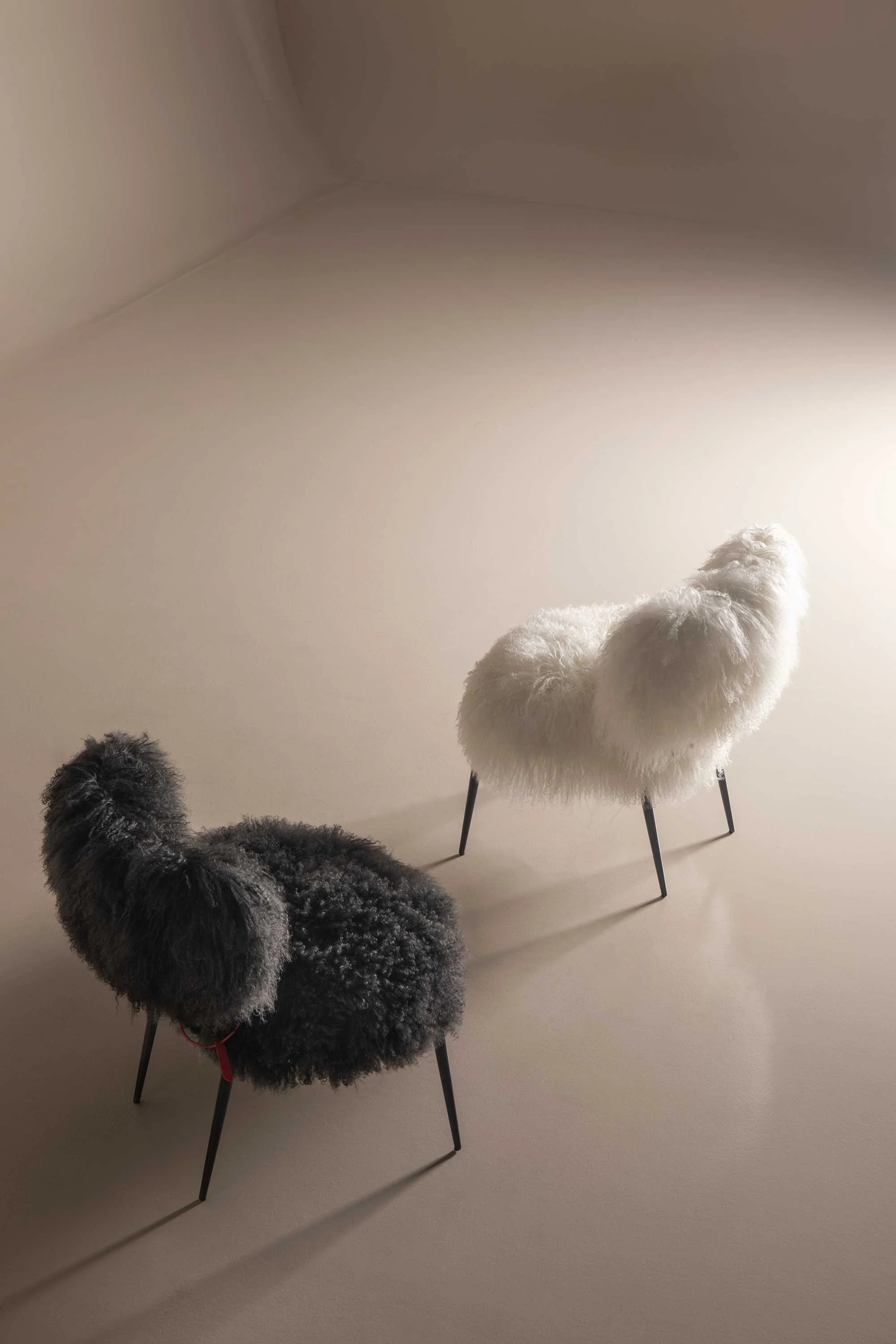
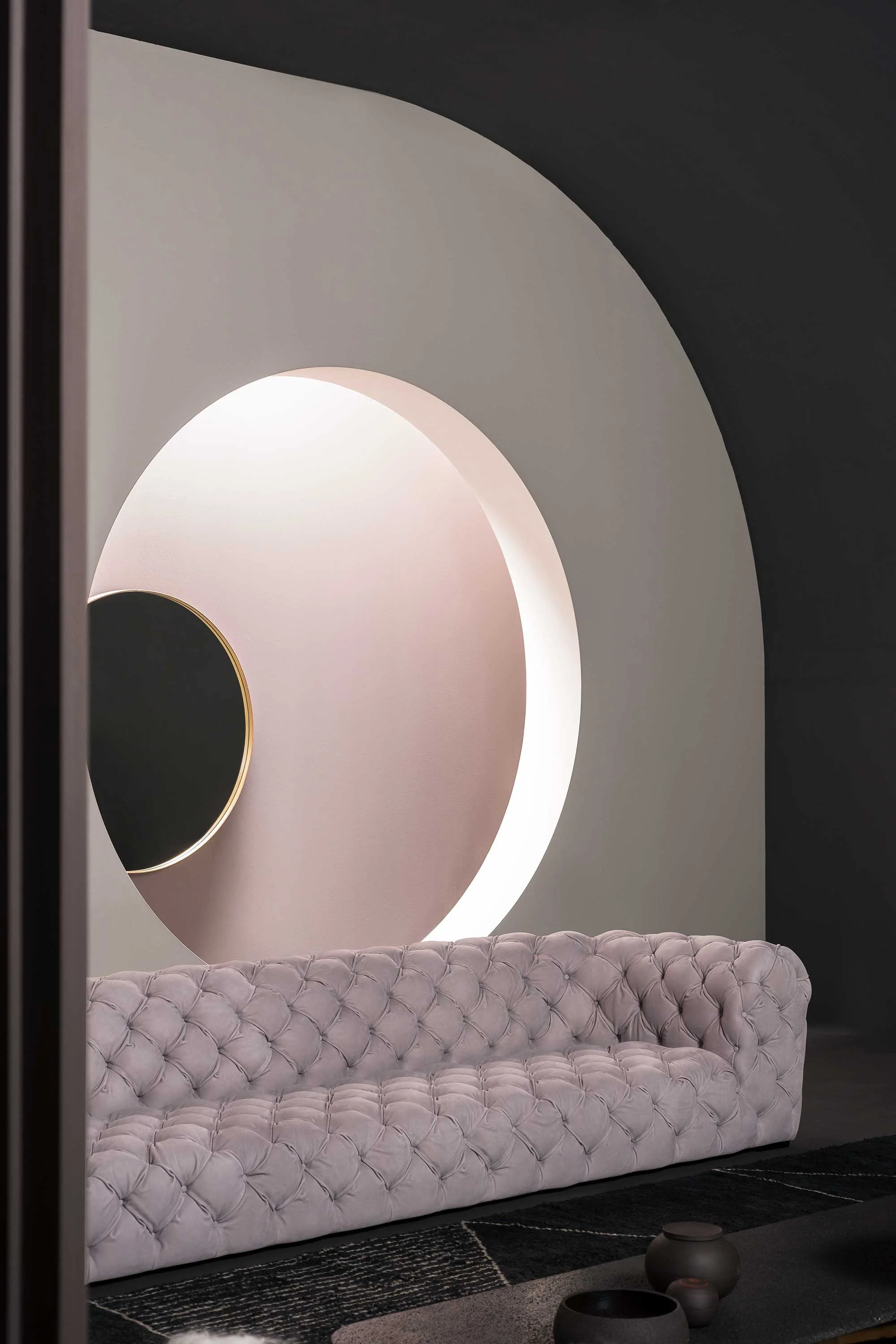
These influences resonate clearly in Navone’s work for Baxter, where she has consistently pushed the limits of the maker’s craft. The Housse collection, for instance, treats leather in unexpected ways: worked to behave almost like fabric, its soft, generous curves invite a tactile connection. The Chester Moon sofa, meanwhile, offers a wink to the traditional Chesterfield, its quilted, tufted surface balancing tradition with a relaxed, modern poise.
This ethos mirrors Navone’s wider practice: a willingness to test materials, welcome chance and allow craft to lead the outcome. Despite her stature, she remains deeply attuned to simplicity and the poetry of everyday objects. Her philosophy of tham ma daa — a Thai expression approximating to ‘ordinary’ — celebrates the potential of the everyday.
While working in India, Navone began to experimen with aluminium and asked a local craftsperson to reinterpret the Sellerina chair as a polished cast aluminium shell. By retaining the chair’s organic, sculptural curves but swapping the medium, the piece is transformed into something unexpected and contemporary.
‘Be open to accidents. Be open to chance. Sometimes when things go wrong, it becomes part of the result you didn’t expect,’ she observes. ‘So I don't have any preconceptions in my mind. I want to be free and ready to absorb whatever is coming.’ It’s this openness that has sustained one of contemporary design’s most enduring collaborations, where experimentation, curiosity and trust in the process have shaped many of Baxter’s most recognisable works.