The Rusted Steel Cabins a Father and Son Built by Hand in Orange
Casey Brown Architecture’s Permanent Camping series has always asked the same question. At its third iteration — two Corten A-frames on a working sheep farm outside Orange — the answer is sharper than ever
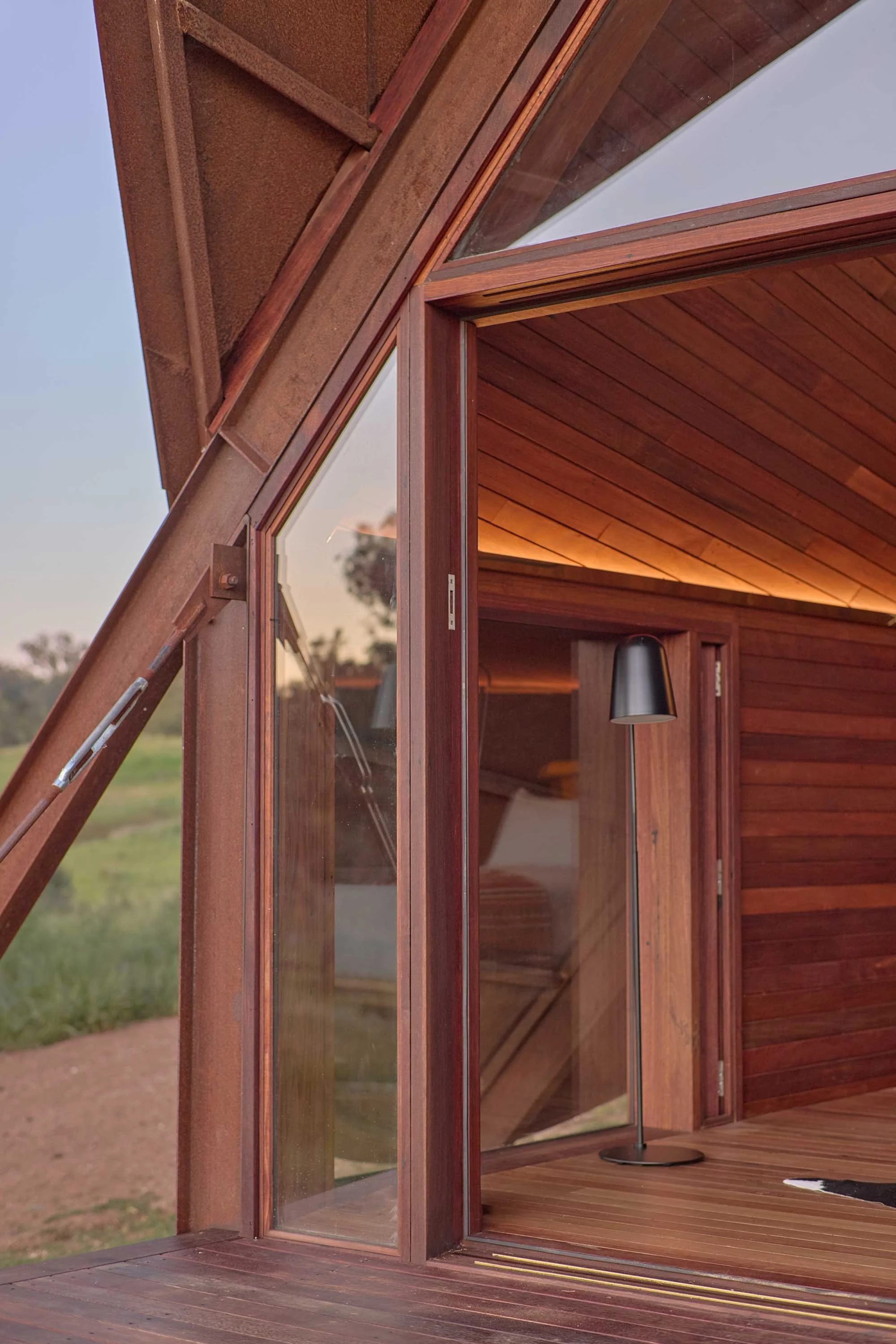
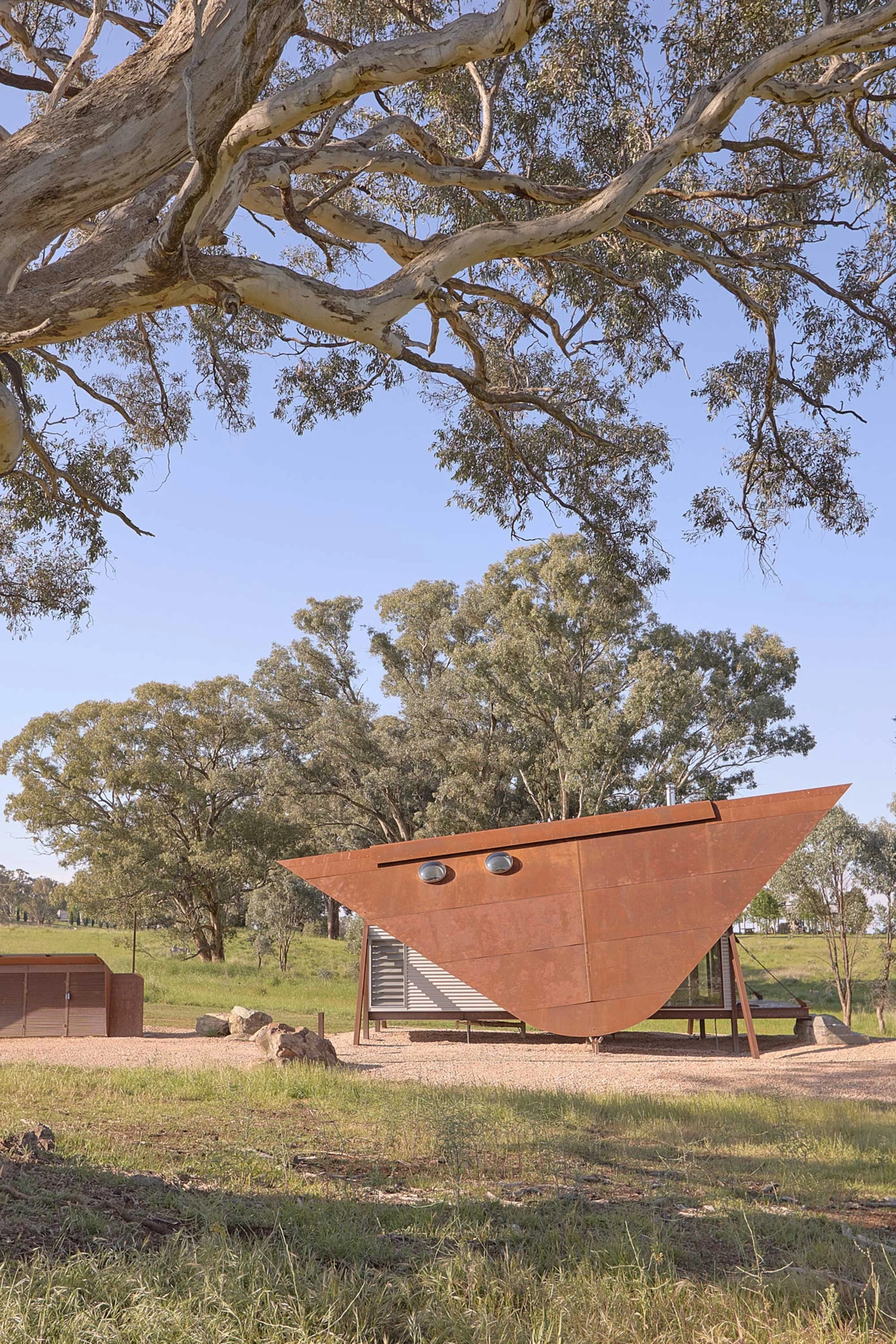
Two Corten-clad A-frames sit on a working sheep farm outside Orange, low against the paddock. From a distance they could be farm sheds. Get closer and the geometry is more deliberate — sharply angled steel forms, prefabricated off-site and raised on legs above ground that freezes in winter and bakes in summer.
This is the third in Casey Brown Architecture’s Permanent Camping series, after earlier cabins in Mudgee and Berry. The brief has barely shifted: two people, a bed, a fireplace, a compact kitchen, a deck. The restraint is the idea. PC3, led by project architect Daniel Weber, asks what you actually need, then stops there.
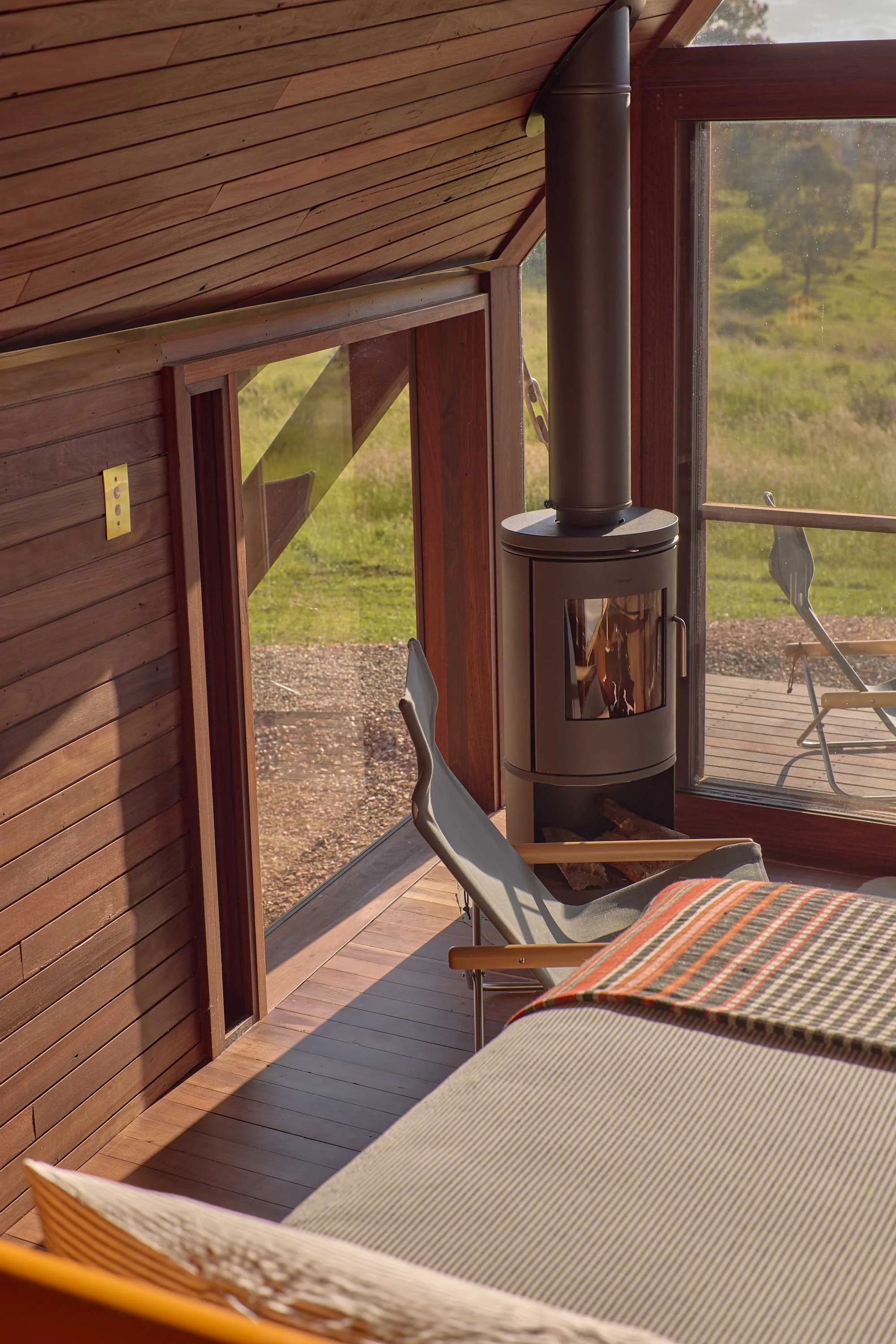
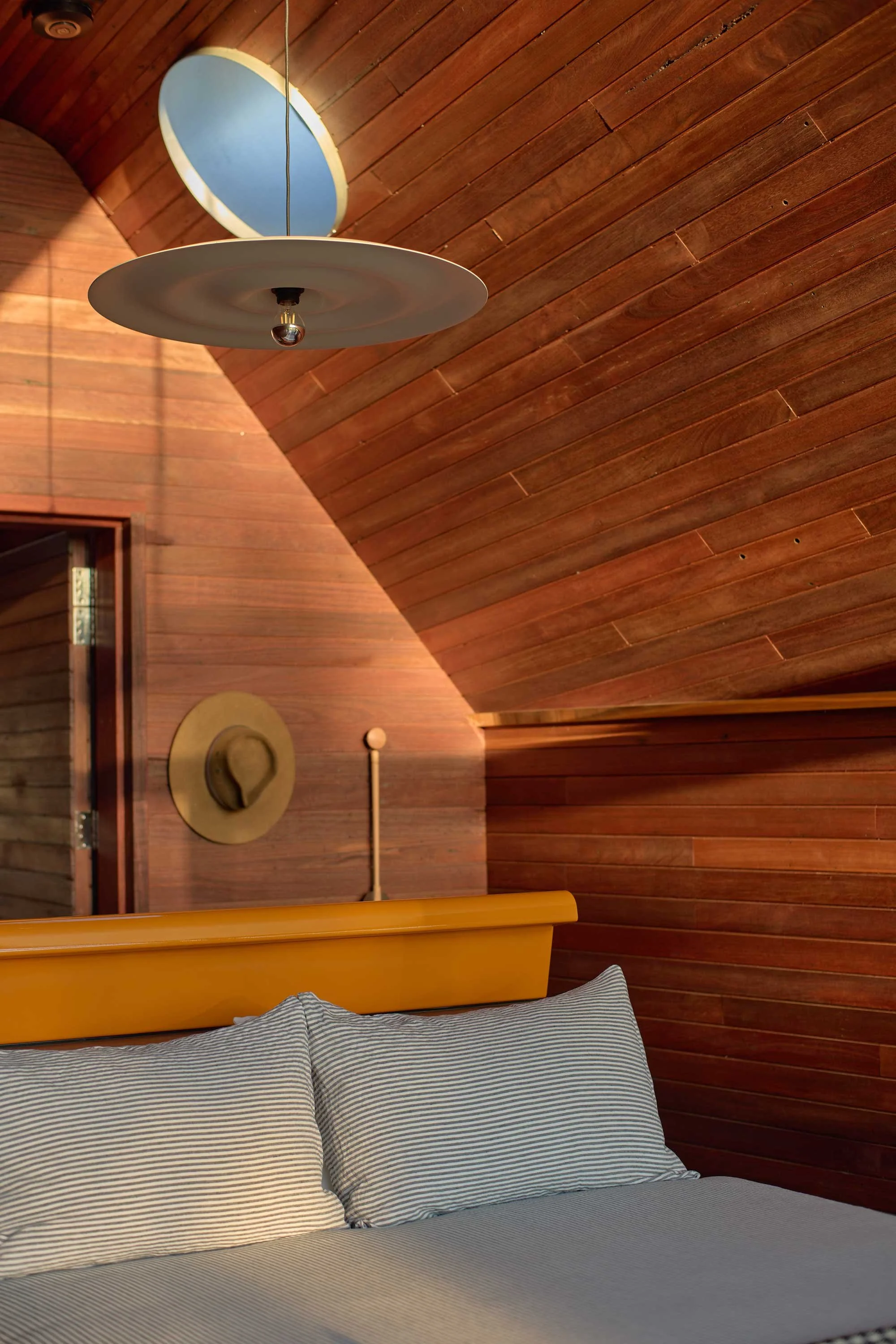
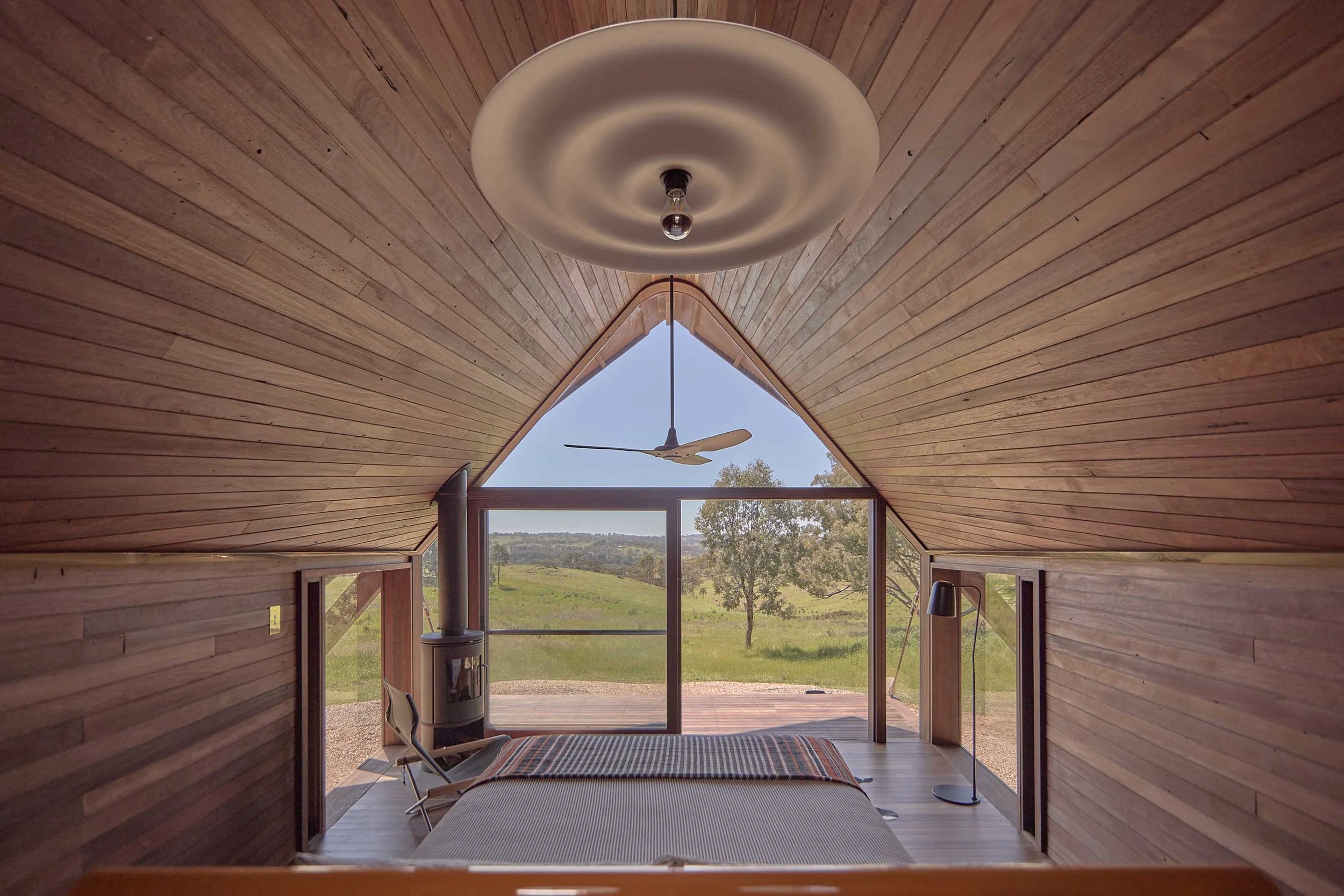
The site is unforgiving — snow, bushfire risk, winds across open paddocks — so the structure is entirely steel, with no timber to rot, burn or feed termites. Inside, the logic flips. Oiled recycled ironbark covers the walls and ceiling, bespoke brass fittings catch the light, and custom steel details, painted orange by a local smash repair garage, provide a moment of levity. Circular skylights pierce the roof, tracking the sun through the day. At the rear, the plan narrows to a fully louvred bathroom where the landscape comes in on all sides.
Both cabins run entirely off-grid, serviced by an external box that holds batteries, tanks and firewood. The property owner and his son built much of the structure themselves, over years — every weld their own. That matters here. PC3 sits in a region filling up with retreats, and the fact that this one was made slowly, by hand, by people with skin in the game, is exactly what gives it its character.
Text by Katherine Ring
Images by Zella Casey Brown