This Quanzhou Hotel Found a Reef Inside the Walls
At Kaipuu on the Reef in Quanzhou, Signyan’s renovation decision to expose rather than conceal the ancient granite beneath the building turned out to be its making
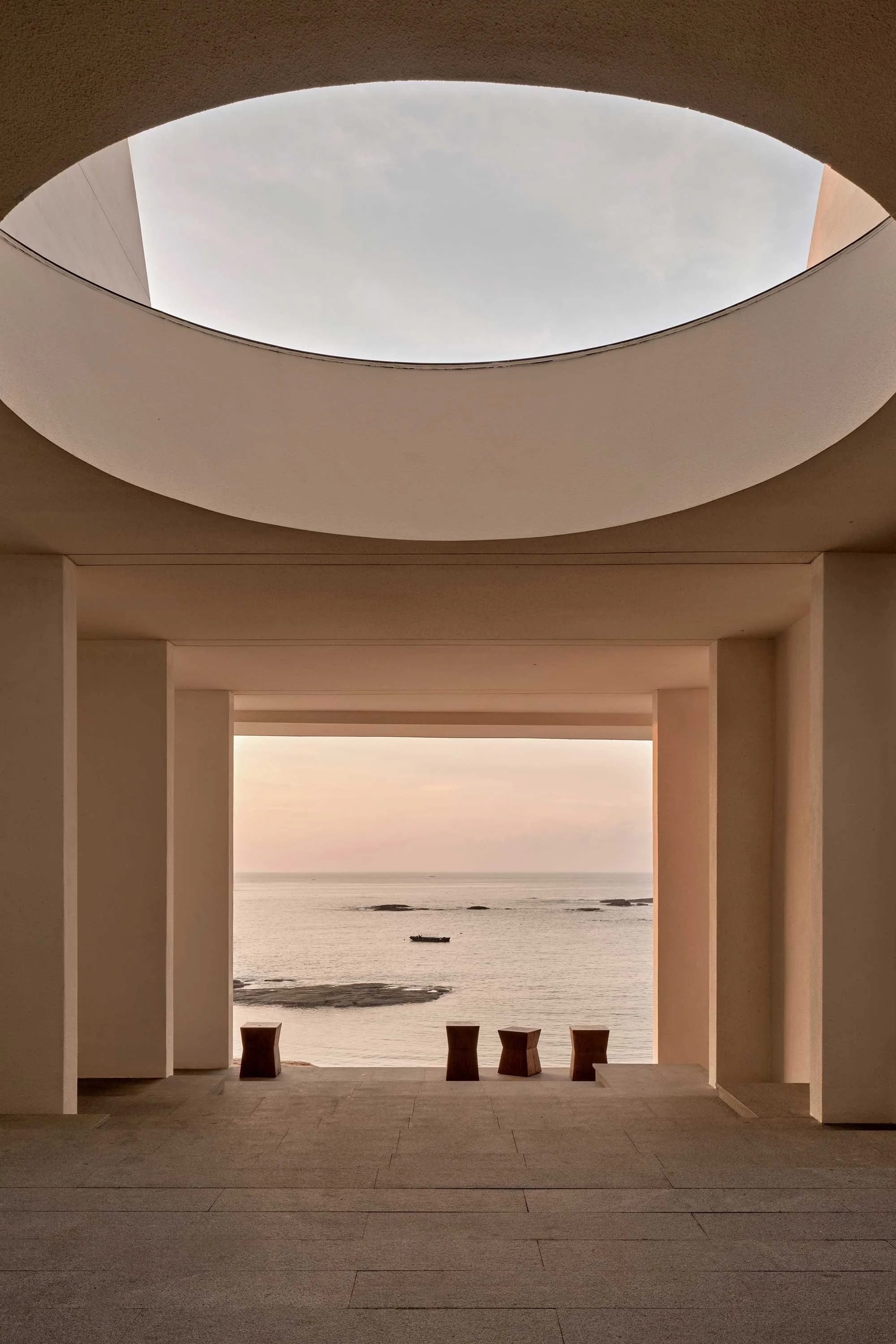
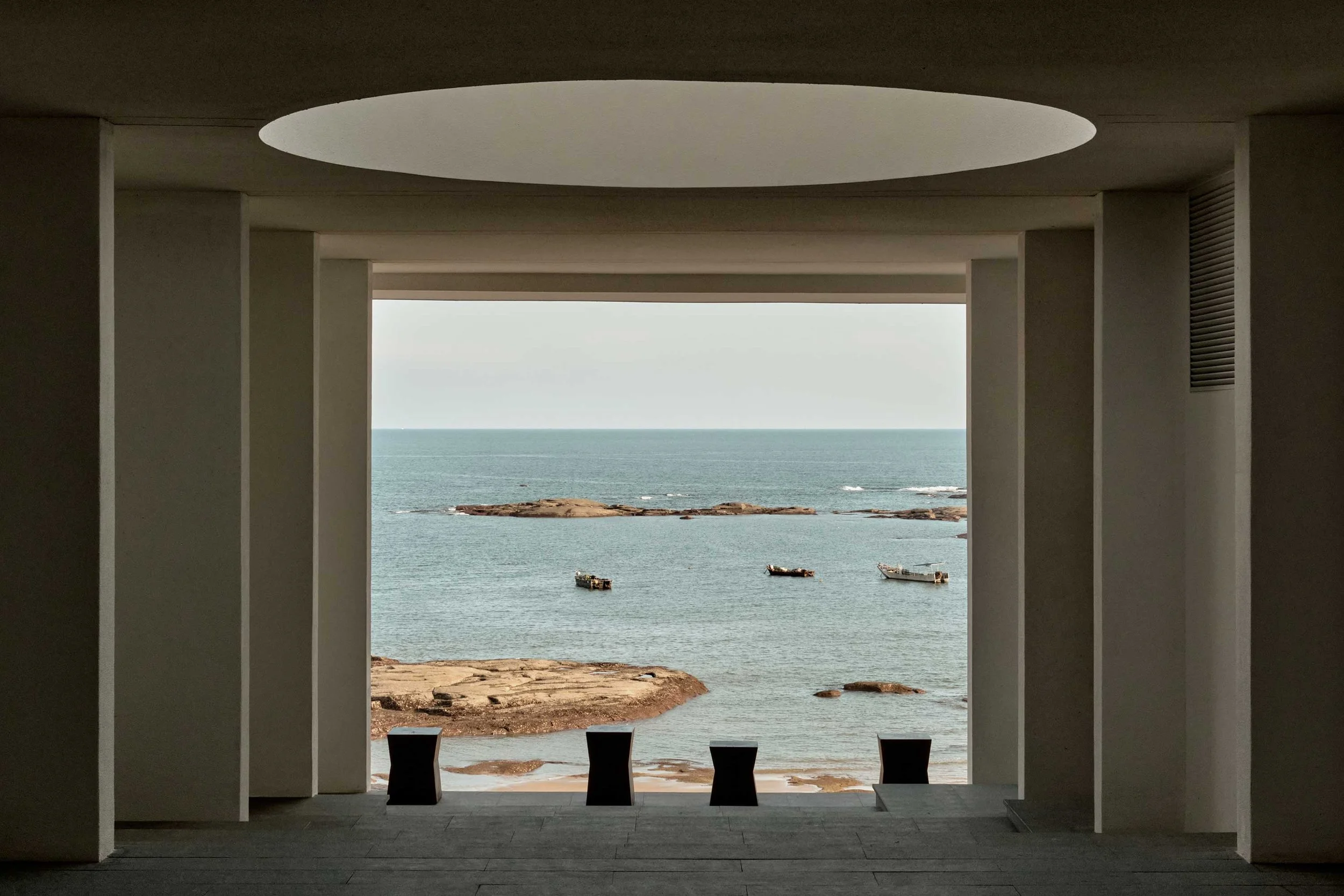
Quanzhou isn’t mentioned much in conversations about Chinese design destinations, but that may be changing. The city — once the eastern terminus of the Maritime Silk Road, a place where Arab merchants, Portuguese traders and Fujian fishermen all left their mark — sits on the southern coast and has been shaped by centuries of trade and outside influence. Thirty minutes from the city centre, where the shoreline gives way to exposed granite reef, Kaipuu on the Reef has opened as the most ambitious hotel the region has seen.
Chongqing-based studio Signyan came to the project late. The building's structure was already complete when they were brought in to handle the interior renovation, furniture and artwork. The first thing they did was demolish walls.
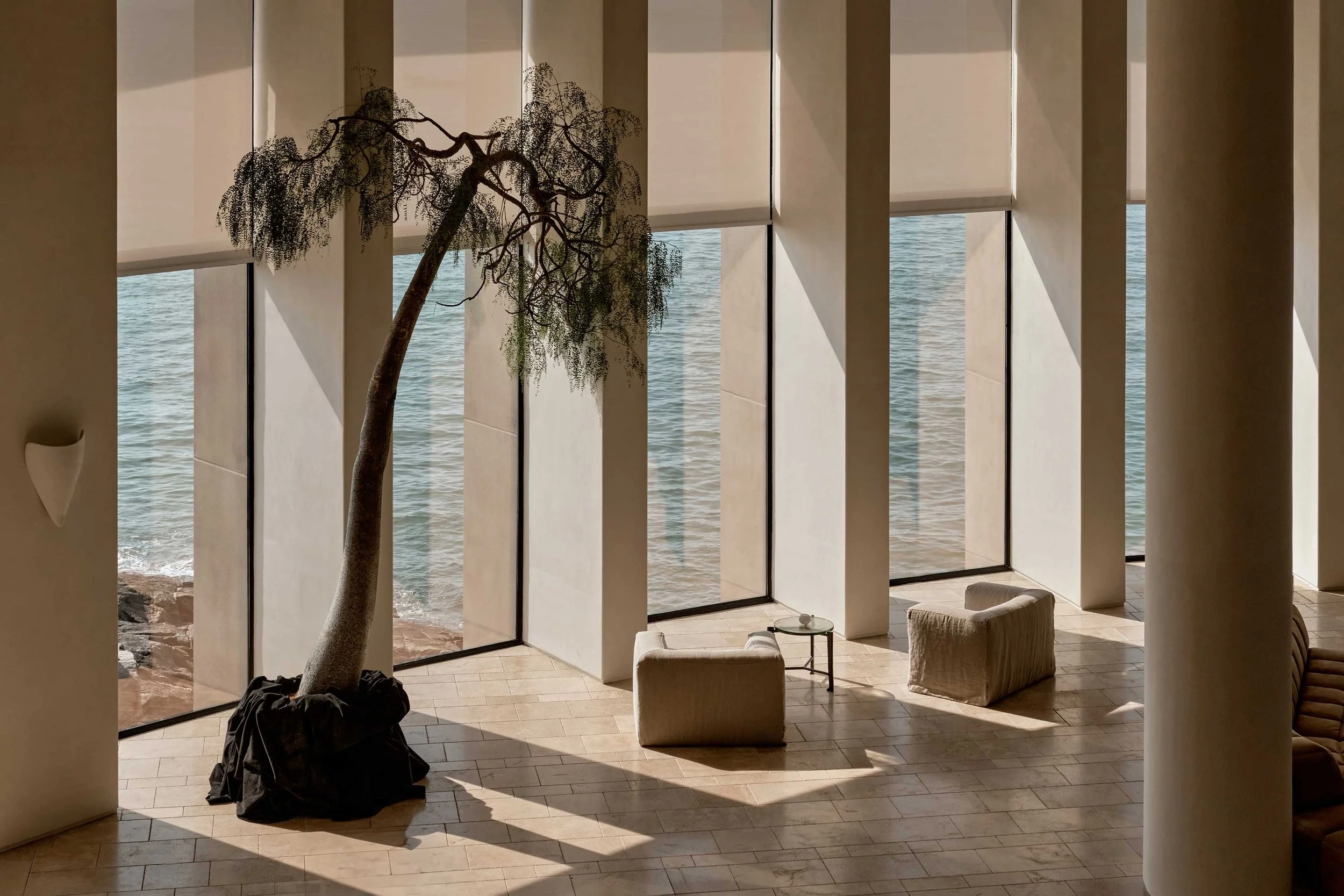
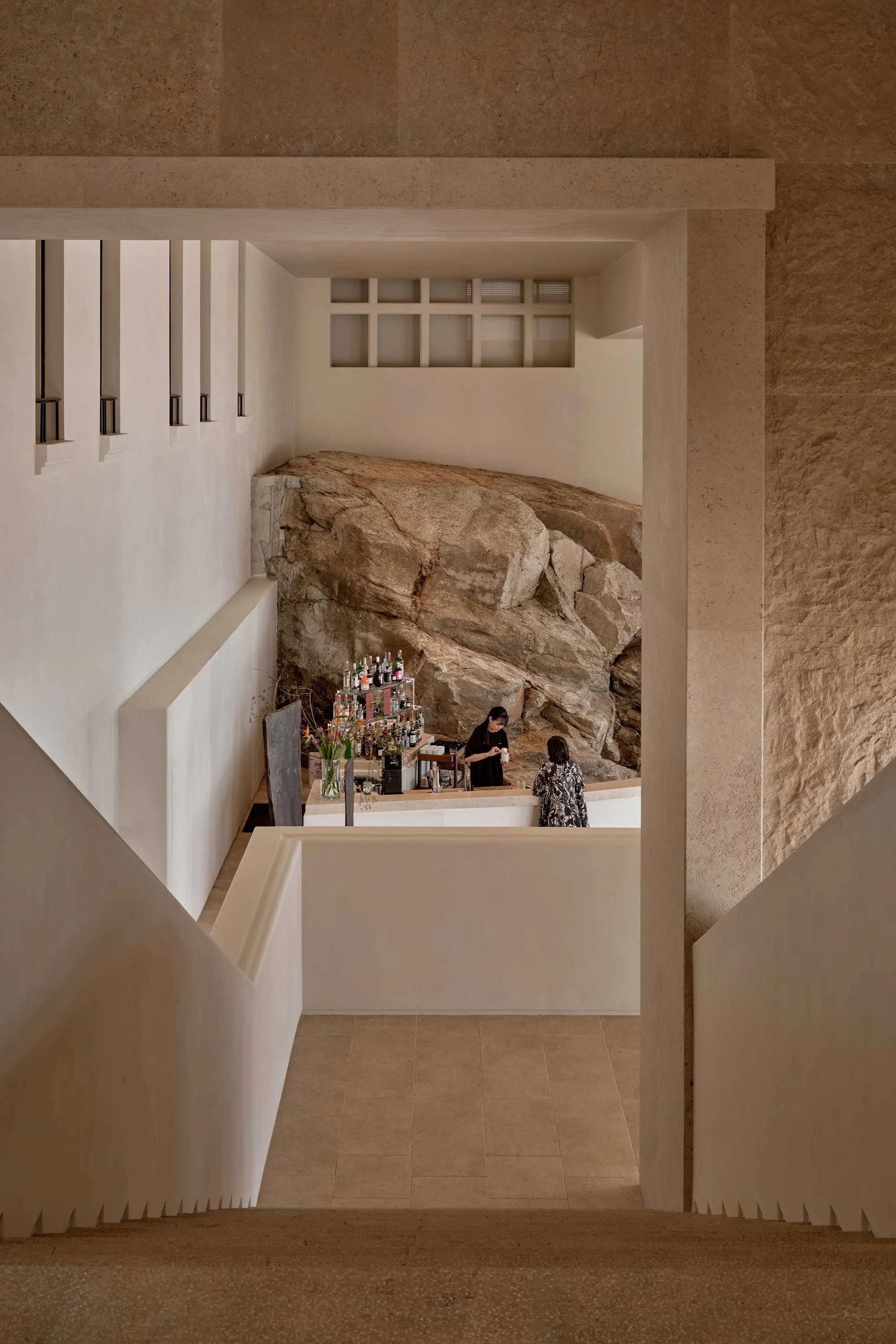
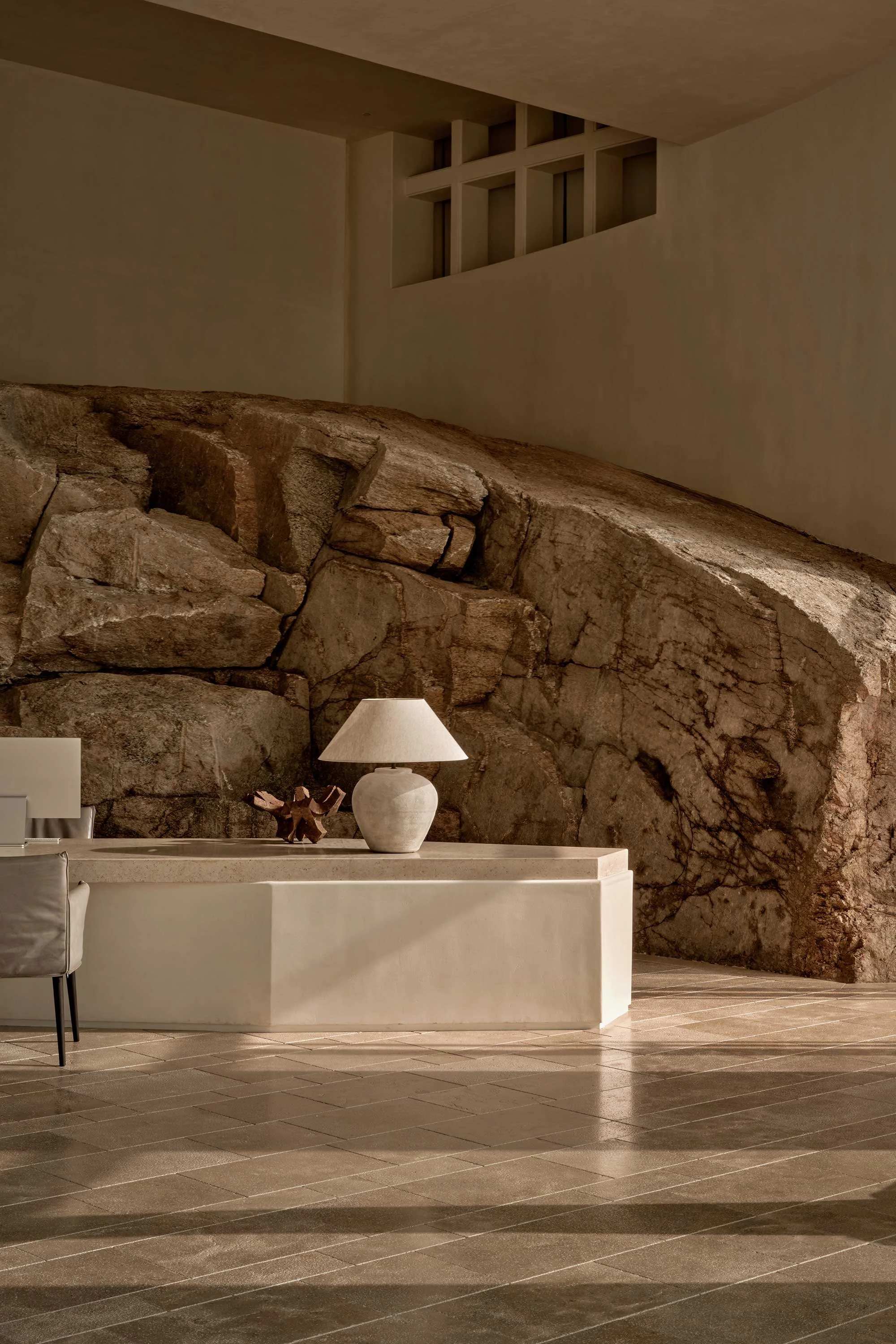
‘The original architecture had actually enclosed the reef rock,’ says Signyan’s Fei Qi. The granite that continues the reef — granite that had been on the Fujian coast considerably longer than any hotel — had been wrapped and hidden. ‘We thought it was quite a gift from nature,’ says Qi. ‘We wanted to make it the focus, especially in the grand hall.’ The plaster was thus stripped back to expose the rock entirely. Walk into the lobby now and the reception desk stands out against a raw rock face, unpolished and unmediated. Stone columns and pale plaster walls are a deliberate counterpoint — what Qi describes as ‘a dialogue between nature and order’.
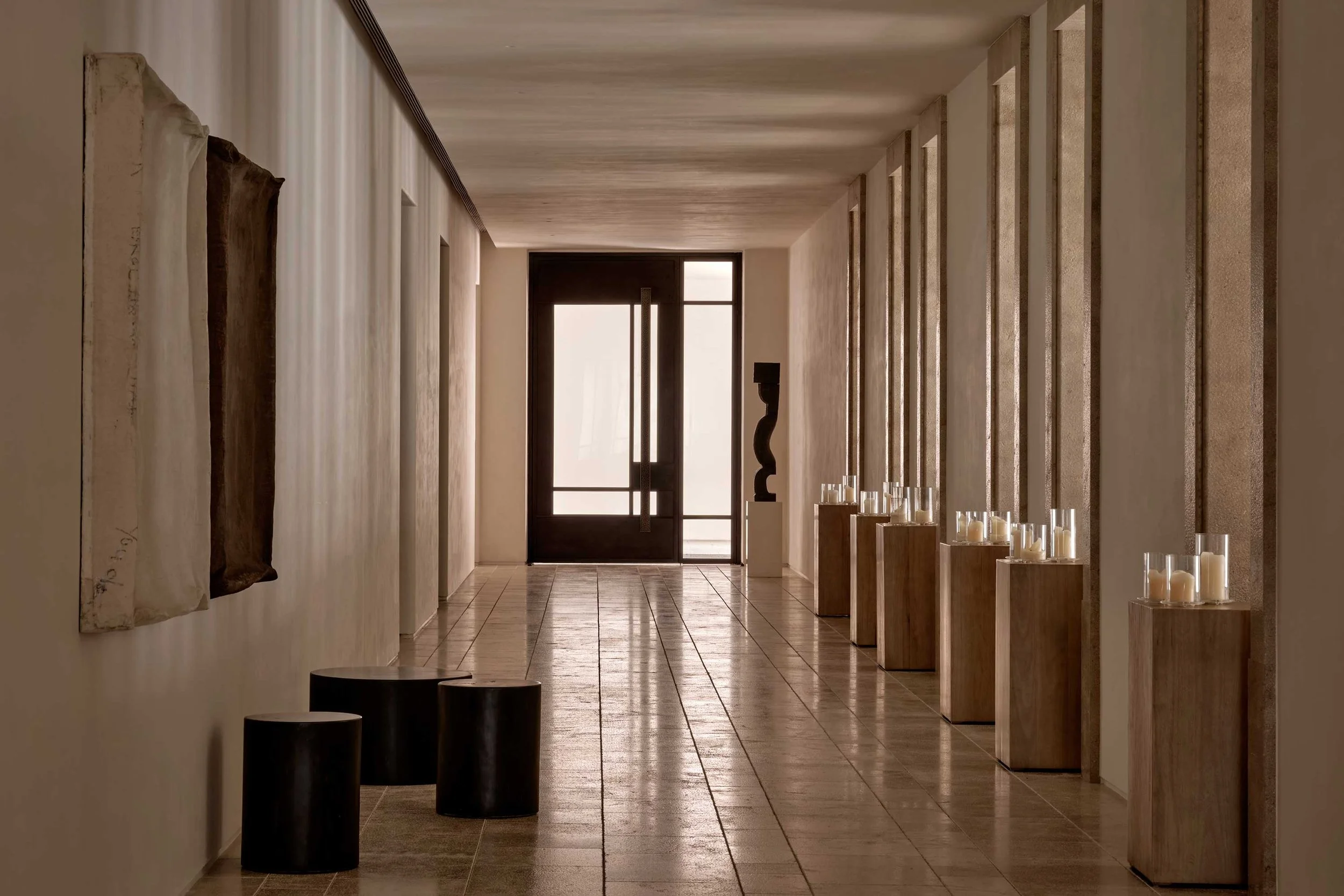
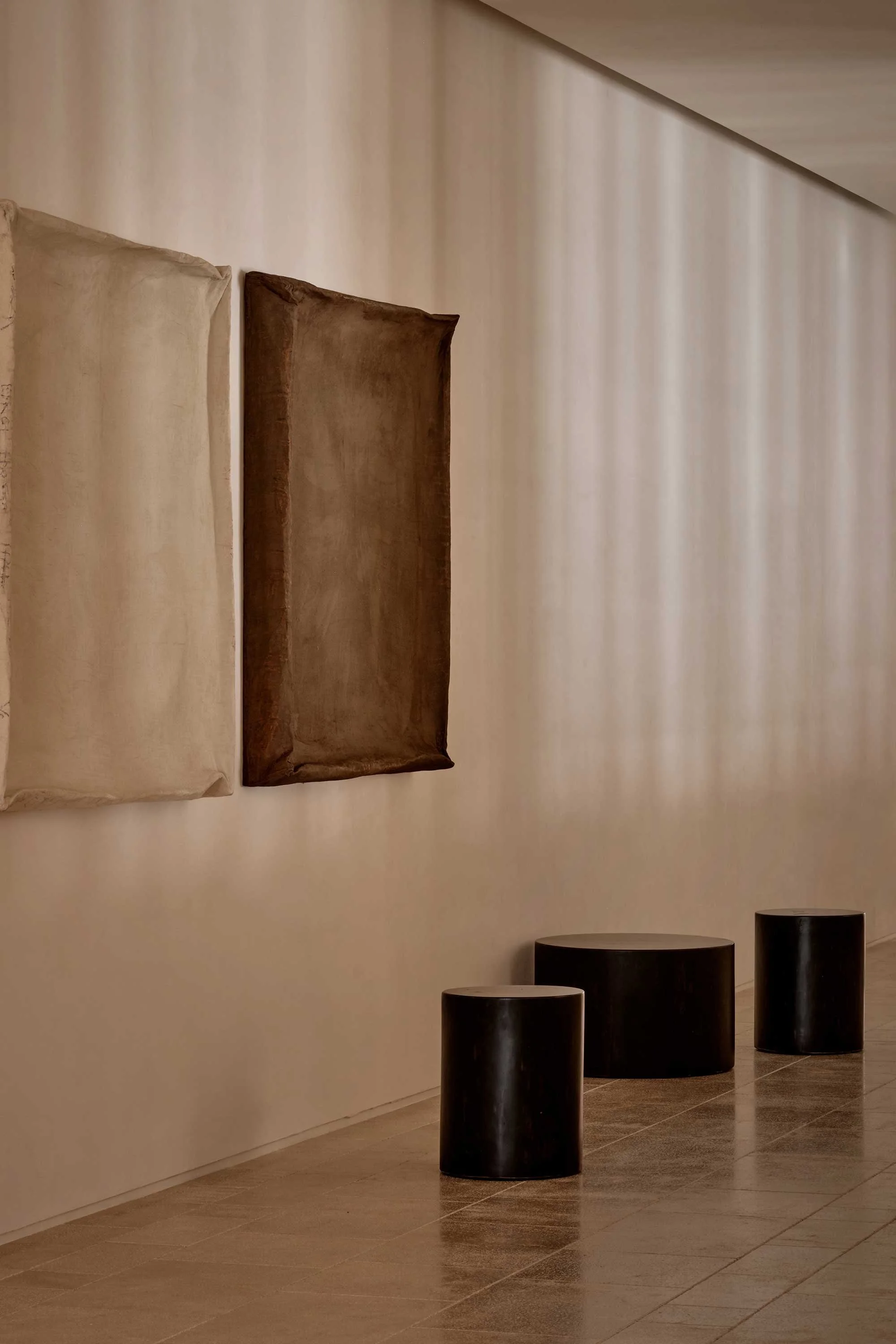
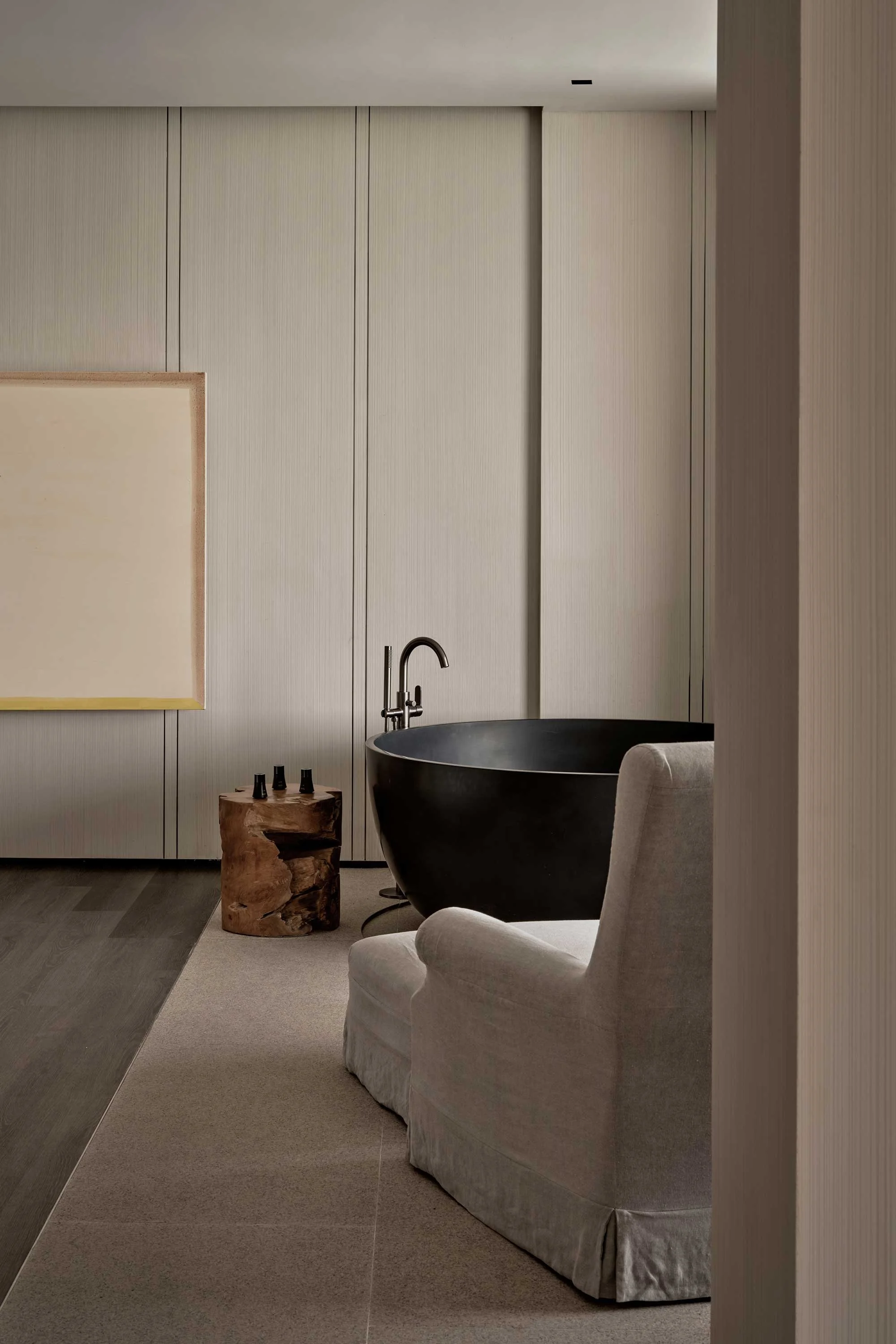
The 46-room hotel keeps to the same palette throughout — sand, grey, warm timber. ‘We used a lot of neutral and natural materials,’ says Qi. ‘Not too loud.’ Furniture and objects were selected in collaboration with a group of young Chinese designers, most of them working with the studio for the first time. Studio Kae produced a ceramic tea set whose rough, almost sand-blasted finish recalls the reef stone outside. Designer Hai Fu contributed cement spheres placed along softly shimmering paving in the corridors. Painter Ni Zhi Qi’s large canvases hang in the entrance hall, dark and raw at the edges. And the hotel’s signature scent was developed with Chinese fragrance brand Documents. ‘Quanzhou is a city with quite a lot of diversity,’ says Qi. ‘There are young local artists doing very creative work there, and we wanted to invite them into the project.’

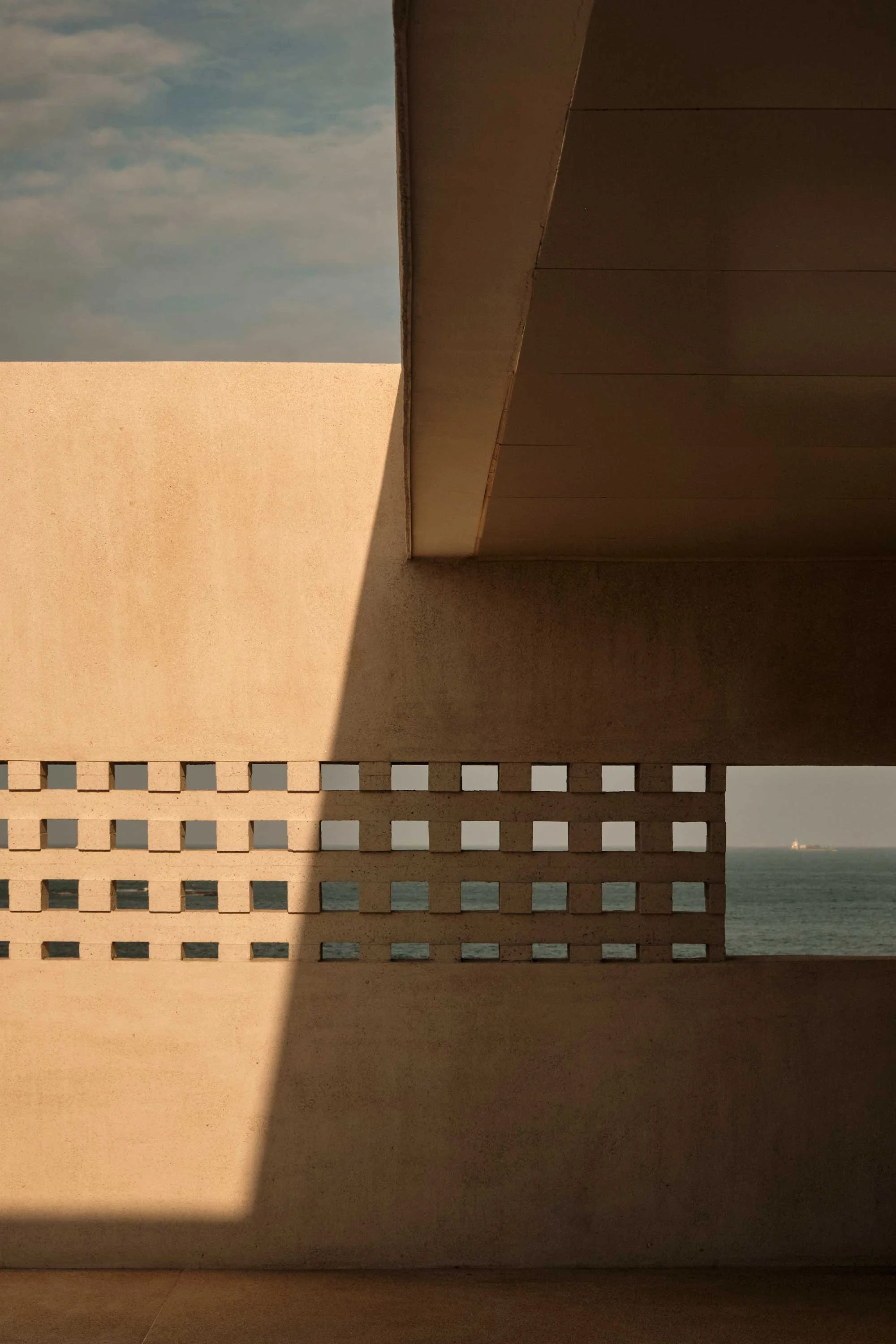
A year after the hotel opened, a second building was completed on the same stretch of reef — the Healer Cafe, a three-storey white structure that sits closer to the water than the hotel itself. Its gridded perforations reference the lattice patterns found in Quanzhou’s traditional architecture, and shell fragments are pressed into the wall plaster. The ground floor opens directly onto the beach, the upper floor serves as a gallery and private dining space, and the level between moves from ceremonial to casual, all looking over a crescent bay where fishing boats still anchor. ‘The clients wanted to offer a space where people could be even closer to the sea,’ says Qi. On some evenings, guests light bonfires on the sand below.
Text by Katherine Ring
Images by Jonathan Leijonhufvud